
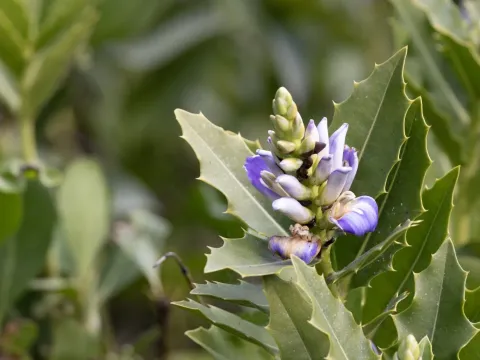
Sea holly
Acanthus ilicifolius
Acanthus ilicifolius, commonly known as sea holly, belongs to the Acanthaceae family. This evergreen shrub is a hallmark species of mangrove ecosystems, typically found in tropical and subtropical coastal zones.
What the section contains
Sea holly
The plant originates from the coastal regions of Asia and Oceania. It is naturally adapted to flourish in brackish water, estuaries, and mudflats where tidal influence is consistent.
Botanically, it features rigid, holly-like serrated leaves and striking spikes of flowers. Its root system is specialized to withstand waterlogged, low-oxygen conditions common in its native habitat.
Climatic requirements involve high ambient humidity and constant warm temperatures throughout the year. It exhibits an impressive tolerance to salinity, making it a rare crop candidate for saline-affected lands.
Agrotechnical management in controlled cultivation requires mimicking tidal patterns and maintaining a mineral-rich substrate to ensure optimal physiological development of the plants.
The primary economic use of Acanthus ilicifolius lies in the pharmaceutical industry. Its roots, leaves, and seeds are rich in phytochemicals, including alkaloids and antioxidants, which show promise for medical applications.
Harvesting involves the collection of vegetative biomass and roots. Proper post-harvest handling, including rapid and controlled drying, is essential to preserve the biological activity of the secondary metabolites.
Beyond pharmacy, there is increasing interest in utilizing this plant for phytoremediation. Its ability to absorb heavy metals from polluted coastal soils offers an environmental service for land restoration.
Commercial cultivation practices are currently being researched to ensure a sustainable supply of raw material without damaging wild mangrove forests. This approach standardizes the chemical quality of the harvest.
Future development aims to integrate sea holly into agroforestry systems, where it can provide both economic and ecological benefits by stabilizing coastal soils and acting as a secondary crop.
Fungal pathogens represent the most significant threat to cultivated stands, particularly when soil aeration is inadequate. Regular monitoring of drainage is vital to prevent root rot.
Insect pests that target foliage can reduce yield quality. Integrated pest management strategies, focusing on biological controls, are preferred to maintain the integrity of the ecosystem.
Environmental degradation and habitat loss are the primary external threats to the species' survival in nature. This underscores the importance of domesticating the crop for sustainable production.
Soil quality management is critical, as extreme changes in chemical composition can alter the plant's metabolism and susceptibility to various diseases. Stability of the growing medium is paramount.
Implementing strict quarantine measures for new planting material helps prevent the introduction of invasive pathogens into the cultivation site, ensuring long-term health and productivity.