
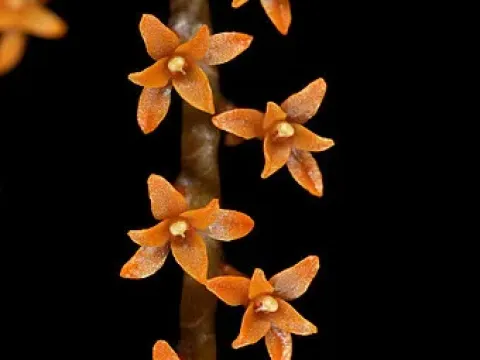
Chamaeangis
Chamaeangis
Chamaeangis is a genus of epiphytic orchids belonging to the Orchidaceae family. Native to the tropical regions of Africa and Madagascar, these plants are known for their distinct, often pendulous, racemes of small, fragrant flowers that appear in the wild on tree trunks.
What the section contains
Chamaeangis
To successfully grow Chamaeangis in a cultivated setting, one must simulate its natural tropical habitat. This involves maintaining high ambient humidity, ideally between 70% and 80%, and ensuring consistent air circulation to prevent stagnant conditions.
Lighting requirements are specific: they prefer bright, filtered light. Exposure to direct sunlight can severely damage the foliage, leading to yellowing or scorching. In indoor environments, placement near a north or east-facing window with light shading is generally recommended.
The substrate for these orchids should be loose and airy, mimicking the bark of trees. A mixture of pine bark, sphagnum moss, and charcoal is ideal. The pots must have excellent drainage, as the roots are sensitive to rot and need to dry out slightly between waterings.
Temperature management is critical. These plants thrive in intermediate to warm temperatures. During the active growth season, keep them in a range of 22–26°C. During the cooler season, provide a slight drop in temperature to encourage blooming, but never below 16°C.
The most significant threat to Chamaeangis is root rot, which typically occurs due to poor drainage or excessive watering. Once root rot sets in, the plant loses its ability to absorb nutrients and water, leading to rapid decline.
Pests like mealybugs and scale insects are common in collections. They hide in the leaf axils and on the undersides of leaves, draining sap and weakening the plant structure over time.
Fungal infections can manifest as leaf spots or stem rot, often triggered by water sitting on the foliage or lack of ventilation. Proper hygiene, such as avoiding overhead watering, is essential for prevention.
Spider mites can also become a problem if the ambient humidity drops below recommended levels. Regular misting or the use of humidifiers helps maintain an environment unsuitable for mite infestations.
Management of these threats involves constant monitoring and the use of targeted biological or chemical treatments, alongside maintaining clean growing surfaces and properly sanitized tools.