
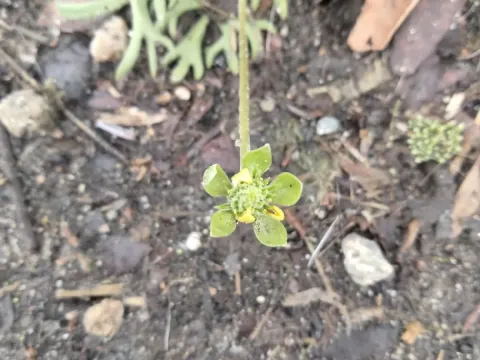
Ceratocephala orthoceras
Ceratocephala orthoceras
Ceratocephala orthoceras, belonging to the Ranunculaceae family, is an annual herbaceous plant typically recognized as an early spring ephemeral. Its distribution spans across various steppe and semi-arid regions of Eurasia.
What the section contains
Ceratocephala orthoceras
The plant demonstrates significant ecological flexibility, thriving in well-lit, open habitats. It shows a preference for light loamy soils that retain sufficient moisture during the critical spring growth phase.
As an ephemeral, the plant completes its life cycle rapidly, emerging in late winter or early spring and setting seeds before the onset of summer drought. This biological strategy makes it a common inhabitant of winter crop fields.
Botanical traits include small basal leaves and distinct fruits with elongated appendages, which assist in seed dispersal. Its root system is relatively shallow, reflecting its adaptation to exploiting topsoil moisture.
In an agricultural context, while not a cultivated crop, understanding its ecological niche is vital for managing field biodiversity and ensuring that it does not compete with main grain crops.
Like many members of the Ranunculaceae family, the plant can be susceptible to various fungal pathogens, such as powdery mildew, especially in environments with high humidity and poor air circulation.
Although it escapes much of the heavy pest pressure due to its short growth duration, some insects may feed on its foliage, potentially affecting seed production and dispersal rates.
Agricultural management usually involves early spring field harrowing, which effectively destroys the young rosettes of the plant before they can establish a strong foothold in the field.
Chemical control measures should be timed carefully, utilizing selective herbicides during the early rosette stage if infestations reach economic thresholds that threaten the main crop yield.
Crop rotation remains the most effective long-term strategy, incorporating varied soil tillage practices that disrupt the life cycle of this early-season competitor.