
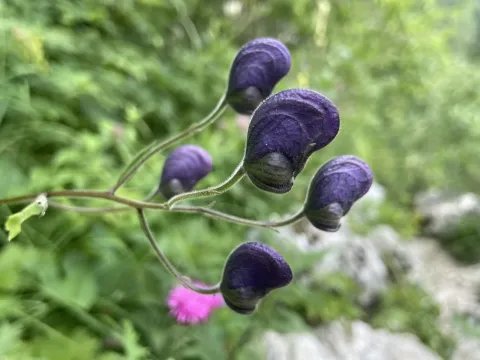
Aconitum degenii
Aconitum degenii
Aconitum degenii is a perennial herbaceous plant belonging to the Ranunculaceae family. Native to the mountain regions of Central and Eastern Europe, particularly the Carpathians, this plant thrives in cool and humid alpine environments.
What the section contains
Aconitum degenii
The cultivation of this species requires fertile, humus-rich soil that is moisture-retentive but well-drained. It performs best in partial shade, where the plants are protected from the harsh midday sun while receiving sufficient light for flowering.
Botanically, it is characterized by upright stems, deeply lobed dark green leaves, and striking helmet-shaped flowers arranged in terminal racemes. Its morphology is adapted to survive cold winters and mountain winds.
Agronomic maintenance includes regular irrigation, especially during dry spells, and mulching to keep the root system cool. Providing adequate nutrition through organic compost amendments during the early spring ensures robust development of the floral display.
The main use of Aconitum degenii is in landscape design and ornamental gardening. Due to the presence of potent alkaloids throughout the entire plant, it is strictly classified as a toxic species, requiring careful handling and placement away from areas accessible to children or pets.
Common pests affecting this crop include aphids and slugs, which can damage tender leaves and buds. Integrated pest management, including physical barriers and environmentally friendly pesticides, is recommended to mitigate these threats.
Diseases are typically associated with excessive humidity and poor air circulation. Powdery mildew is the most frequent fungal infection, while root rot may occur if the soil remains waterlogged for extended periods, necessitating improved drainage systems.