
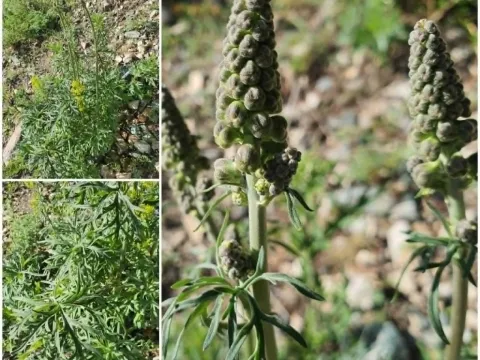
Aconitum barbatum
Aconitum barbatum
Sowing Aconitum barbatum is most successful when done in the autumn for winter stratification. Seeds require a prolonged period of cold temperatures to break dormancy, making outdoor sowing in late October the standard practice for agricultural propagation.
What the section contains
Aconitum barbatum
Spring sowing requires artificial stratification in a controlled cold environment for at least two to three months. Without this pre-treatment, seeds will either fail to germinate or exhibit very sporadic development, which is inefficient for large-scale production.
Seeds should be sown at a shallow depth of approximately 1 to 2 centimeters. Maintaining a row spacing of about 30 centimeters ensures that the young plants have adequate space for root expansion during their first year of development.
Germination is often slow and can occur unevenly over several weeks. During the initial growth stage, the plant focuses exclusively on developing a basal leaf rosette and a robust root system, which is crucial for surviving the first winter.
Vegetative propagation via root division is another viable method for increasing crop stocks. This is performed early in the spring as soon as growth commences, ensuring that each division retains a sufficient portion of the root system to facilitate rapid establishment.
Aconitum barbatum belongs to the Ranunculaceae family and prefers semi-shaded environments. Direct exposure to intense afternoon sunlight should be avoided, as it can cause significant stress, leaf chlorosis, and reduced vitality in the plants.
The crop thrives in fertile, well-drained loamy soils with a neutral to slightly acidic pH. Proper drainage is the most critical factor, as stagnant water will lead to root rot and inevitable crop failure within a single growing season.
This species is well-adapted to temperate climates and demonstrates excellent winter hardiness. However, during particularly harsh and snowless winters, mulching with organic material is recommended to protect the crown and dormant buds from deep freezing.
Regular irrigation is necessary throughout the active growing season, particularly when flower buds are forming. However, it is essential to apply water directly to the soil to avoid wetting the foliage, which reduces the risk of fungal proliferation.
Nutrient management involves applying balanced fertilizers twice per season: once at the start of spring growth and again before the flowering phase. Organic compost used as mulch provides a slow-release source of nutrients that improves soil structure.
Powdery mildew is a major threat to Aconitum barbatum, especially in conditions of high humidity and poor airflow. Regular inspection and the application of appropriate fungicides are necessary to prevent the disease from spreading across the field.
Root rot caused by soil-borne pathogens remains a constant risk in heavy, waterlogged soils. To minimize this, farmers should implement strict drainage controls and avoid over-watering, which creates a favorable environment for fungal colonization.
Aphids and spider mites are the most common pests that affect the vigor of the plant. If left untreated, these insects can weaken the plant significantly, making it more susceptible to opportunistic diseases and decreasing its overall productivity.
Viral infections can cause stunted growth and mottled leaves, which permanently decrease the ornamental and biological value of the crop. Infected plants should be promptly rogued and destroyed to prevent vectors from spreading the virus to healthy zones.
Slugs and snails can cause substantial damage to young, tender sprouts in early spring. Installing physical barriers, such as copper tape or crushed eggshells, or using safe bait traps, can effectively mitigate the damage to the crop leaves.