
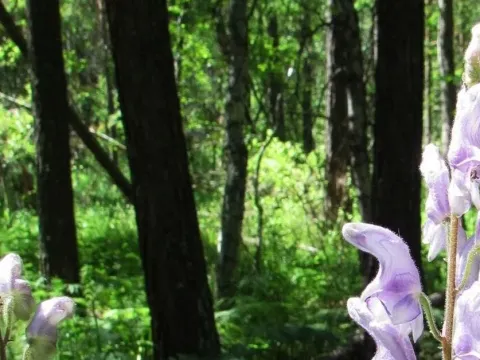
Aconite
Aconitum toxicum
Aconite seeds usually require long stratification for successful germination, so sowing is typically performed in late autumn. The optimal period for sowing in open ground is October or November, when soil temperatures drop below +5°C.
What the section contains
Aconite
If sowing is planned for the spring, seeds must be subjected to artificial stratification in a refrigerator for 2–3 months. Emergence can be irregular, so maintaining stable substrate moisture throughout the germination period is critical.
Seeds should be sown at a depth of no more than 0.5–1 cm, as they are small and sensitive to soil compaction. Using a loose substrate enriched with organic matter is recommended for the best development of the primary root system.
For commercial or garden propagation, vegetative division of the root clump is often used. Dividing mature 4–5 year old plants should be done in early spring or late August, ensuring some native soil remains attached to the roots.
Planting density depends on the specific goals: for medicinal raw material production, the spacing between plants in a row should be at least 40–50 cm to ensure air circulation and facilitate easier management.
Aconite belongs to the Ranunculaceae family and thrives in areas with moderate moisture and fertile soil. The crop performs best in loamy soils rich in humus with a neutral to slightly acidic pH level.
While the plant is shade-tolerant, it requires dappled light to form strong foliage and healthy inflorescences. Direct sunlight during peak midday hours can lead to stunted growth and premature wilting of the flowers.
The culture has high moisture requirements but cannot tolerate stagnant water around the root collar. Excessive waterlogging is a frequent cause of rot in the specific tuberous roots of Aconitum.
Agronomic management includes regular cultivation of inter-row spaces to prevent soil crusting. Mulching the area around the base of the plant helps maintain a favorable microclimate and limits weed development.
Annual hilling of the root collar is an important aspect of care, as many aconite species exhibit exposed renewal buds over time. This practice protects the plant from winter frost and promotes better nutrient uptake.
The primary disease affecting aconite is powdery mildew, which attacks the foliage under unfavorable weather conditions. Preventive spraying with modern fungicides is the standard approach to managing this fungal threat.
Ring spot and other viral infections can lead to leaf deformation and stunted plant growth. Affected specimens should be immediately removed from the field along with the root ball to prevent viral spread.
Aphids and spider mites are the most significant pests, as they feed on the sap of young shoots. Regular monitoring of plant health allows for the timely application of contact insecticides when necessary.
Root rot remains a serious concern when irrigation protocols are poor or when the site has inadequate drainage. Using high-quality planting material and practicing proper crop rotation significantly reduces pathogen risk.
Nematodes can also damage the root system, reducing overall productivity. As a preventive measure, planting companion species with strong phytoncide properties is recommended to suppress soil-borne parasites.