
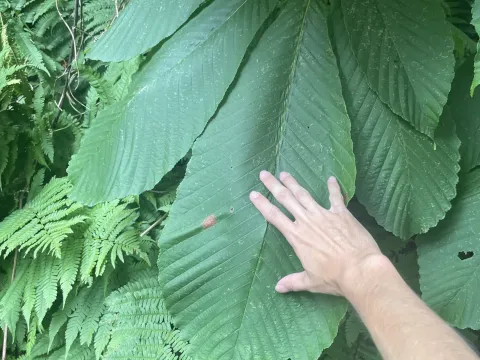
Japanese horse chestnut
Aesculus turbinata
Sowing Japanese horse chestnut seeds should ideally be done in the autumn, immediately following the harvest, as the seeds lose viability quickly when dried.
What the section contains
Japanese horse chestnut
If spring planting is planned, seeds must undergo cold stratification in moist sand at temperatures between 1 and 5 degrees Celsius for 90 to 120 days.
Seeds should be planted at a depth of 5–8 centimeters in well-drained, fertile soil to ensure successful germination and protection from rodents.
Soaking the seeds in lukewarm water for 24 hours prior to planting can help soften the tough outer shell and initiate the germination process.
Germination success is significantly higher in soils that remain consistently moist and are protected from extreme frost during the early development stage.
The Japanese horse chestnut, a member of the Sapindaceae family, is a large deciduous tree native to the mountainous forests of Japan.
This species thrives in deep, rich, and moisture-retentive loamy soils that possess excellent drainage qualities to prevent root rot.
While the tree is tolerant of various light conditions, it performs best in locations with partial shade, especially during the juvenile stage.
It requires consistent humidity and should be sheltered from hot, desiccating winds to maintain leaf quality throughout the growing season.
Proper horticultural care involves annual mulching of the root zone to conserve moisture and maintain soil temperature stability.
The most significant pest for this species is the horse chestnut leaf miner, which creates mines within the leaves, causing premature defoliation.
Fungal infections such as Guignardia leaf blotch can affect the foliage, particularly in seasons with high humidity and poor air circulation.
Bacterial canker represents a serious threat to the trunk and branches, necessitating careful sanitation and pruning of infected areas.
Integrated pest management, including the removal of fallen leaves in autumn, is crucial for reducing the overwintering population of pests.
Using systemic fungicides may be necessary in nurseries to ensure the health and vigor of young, susceptible saplings.
The Japanese horse chestnut is primarily utilized in landscape architecture for its impressive canopy, large palmate leaves, and white panicles.
Seed harvesting is conducted in early autumn when the spiky capsules begin to turn brown and open naturally, revealing the seeds inside.
Its timber is valued in woodworking for its fine texture and ease of machining, making it useful for small-scale carpentry and crafts.
Although the nuts contain high levels of starch, they contain saponins and must be carefully processed if considered for any utilitarian purpose.
The tree serves as an important ecological component in arboretums and large-scale botanical gardens, providing habitat and shade.