
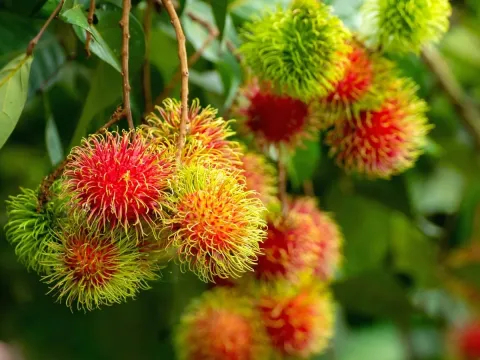
Rambutan
Nephelium
Rambutan (Nephelium lappaceum) is a tropical evergreen tree belonging to the Sapindaceae family. In modern agricultural practices, vegetative propagation through grafting is preferred to ensure genetic uniformity and to reduce the juvenile period before the tree begins to bear fruit.
What the section contains


Rambutan
Seed-based cultivation is possible but less reliable due to the rapid loss of seed viability. Seeds must be planted immediately after extraction from the fruit. Ideally, seedlings are transplanted into the orchard during the onset of the rainy season to establish deep root systems before the dry spells.
Rambutan is highly sensitive to climate, requiring a humid tropical environment. It thrives at temperatures between 22°C and 30°C and is extremely intolerant to frost. Prolonged exposure to temperatures below 10°C will significantly stunt growth and lead to plant decline.
Water management is critical for this crop. Rambutan requires well-distributed rainfall and high atmospheric humidity. The soil must be deep, fertile, and exhibit excellent drainage, as the tree is prone to root rot in waterlogged soils. Sandy loams are generally considered the best growing medium.
Location selection is vital; the site should be shielded from strong winds to prevent branch breakage. Additionally, adequate spacing is required between trees to ensure that every part of the canopy receives sufficient sunlight, which is necessary for flower induction and fruit development.
The yield potential of a rambutan tree is impressive, with mature trees producing between 60 kg and 200 kg of fruit per harvest season. However, productivity can be inconsistent, often influenced by seasonal weather patterns such as periods of drought followed by heavy rainfall.
Commercial utilization of rambutan includes the fresh fruit market, canning industry, and jam production. Furthermore, the oil extracted from rambutan seeds is increasingly utilized in the cosmetic and skincare industry, adding significant value to the agricultural production cycle.
The crop faces pressure from several pests, primarily mealybugs, aphids, and fruit borers. These insects target tender leaves, developing flowers, and fruit skin, often causing direct damage or facilitating secondary fungal infections that compromise fruit quality.
Common diseases affecting rambutan include powdery mildew and various types of stem or root rots. Integrated pest management, which includes canopy management for better airflow and careful irrigation practices, is the most effective way to maintain orchard health without excessive chemical use.
Harvesting is a labor-intensive process performed manually by experienced workers. Fruits are harvested when they reach full maturity, indicated by a deep red or yellow skin color, ensuring that the characteristic spinterns remain undamaged during the process.
Post-harvest life is limited, necessitating immediate cooling. The fruit is typically packed and transported in temperature-controlled environments to minimize moisture loss and preserve the aesthetic appeal of the spinterns, which is a key quality indicator for the consumer market.