
Regel's maple
Acer pentapomicum
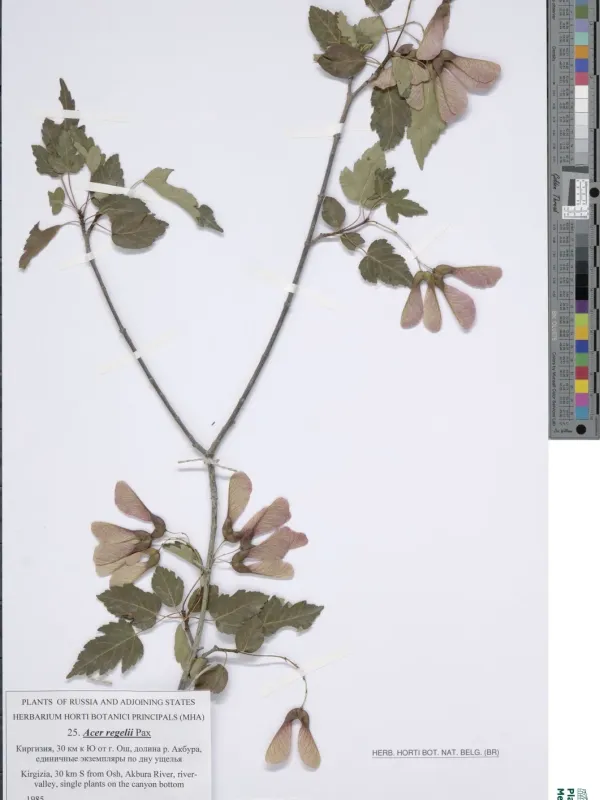
Description
Growing requirements
Regel's maple (Acer pentapomicum) is a deciduous tree species belonging to the Sapindaceae family. Naturally occurring in the mountain regions of Central and South Asia, including Pakistan and Afghanistan, this species is highly adapted to high-altitude environments. It is a resilient plant capable of thriving in areas with significant temperature fluctuations and irregular precipitation patterns.
The cultivation of Regel's maple requires well-drained, stony, or loamy soil types. The tree is particularly sensitive to waterlogging, so it is essential to choose planting sites with excellent drainage. It thrives in locations with full sunlight to partial shade, which allows for optimal photosynthetic activity and development of its characteristic compact crown structure.
Botanically, the species is defined by its small stature and distinctive foliage. The leaves are typically lobed, providing an attractive appearance that makes the tree suitable for urban and ornamental landscaping. Its wood is dense, reflecting its evolutionary adaptation to the harsh, high-mountain environment where protection against physical damage and desiccation is vital.
Climate adaptation is a key feature of Regel's maple. It is hardy enough to survive moderate winters and is accustomed to the dry, mountainous air. While young trees require a certain degree of care during their establishment phase, once mature, they are notably resistant to harsh weather conditions and poor soil quality, making them a low-maintenance choice for specific regions.
Economically and ecologically, Regel's maple is valued for its role in soil stabilization and erosion control. Its deep, robust root system helps secure soil on steep slopes, making it a valuable candidate for reforestation efforts in semi-arid mountainous areas. Additionally, its aesthetic properties make it a desirable ornamental species for specialized botanical collections and naturalistic garden designs.
Main diseases and pests
Like many maple species, Acer pentapomicum is susceptible to fungal pathogens, particularly in humid climates where poor air circulation exists. Regular pruning is necessary to maintain crown health and ensure that the tree remains resistant to common leaf spot infections and fungal growth.
Pests, such as aphids and various types of mites, can occasionally affect the vitality of the tree during peak summer. Monitoring for signs of infestation is recommended to ensure long-term health, as early detection allows for effective management using standard horticultural practices.