
Xanthostemon
Xanthostemon
Xanthostemon is a genus of evergreen trees and shrubs belonging to the Myrtaceae family. Known for their spectacular, brush-like flowers, these plants are highly valued in tropical landscaping for their striking visual impact.
What the section contains

Xanthostemon
The genus originates from the tropical regions of Australia, New Caledonia, and Southeast Asia. Naturally, they thrive in areas with high humidity and consistent warmth throughout the year, typically found in rainforest environments.
Climate requirements strictly dictate that this plant must be kept in frost-free conditions. In non-tropical regions, it is cultivated in greenhouses or as a patio plant that must be brought indoors during the winter months.
Soil conditions are critical for Xanthostemon, as it requires well-draining, slightly acidic to neutral substrate. Heavy, waterlogged clay soils can quickly lead to root decay and the death of the plant.
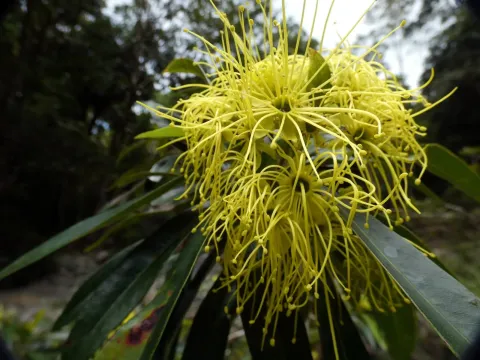
Botanically, these trees exhibit thick, leathery leaves and a robust growth habit. The flowers are the primary ornamental feature, showcasing vibrant stamens that cover the entire crown during the peak flowering season.
Root rot is the most significant threat to Xanthostemon, primarily caused by overwatering or poor drainage systems. Maintaining a delicate balance in soil moisture is essential for long-term survival.
Scale insects and mealybugs are the most common pests that affect this species. These pests often congregate on the undersides of leaves or in the axils of branches, requiring targeted insecticide applications.
Poor air circulation in greenhouses can encourage fungal infections such as powdery mildew or leaf spots. Regular monitoring and proper plant spacing are effective cultural practices to mitigate these issues.
Environmental stress, particularly fluctuating humidity levels, can make the plant more susceptible to opportunistic pathogens. Keeping the foliage clean and the root system stable is vital for natural defense.
In some regions, spider mites may become a nuisance during the dry season. Increasing ambient humidity and periodic misting can help prevent mite infestations from spreading across the foliage.