
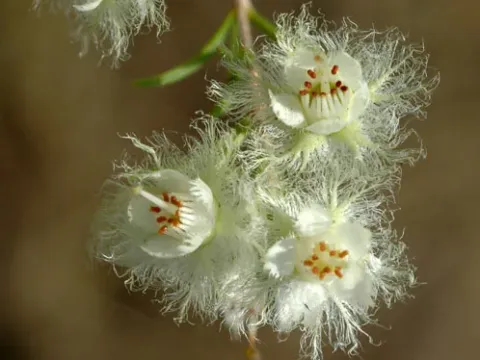
Verticordia cunninghamii
Verticordia cunninghami
Verticordia cunninghamii belongs to the Myrtaceae family and is native to the distinct environments of Australia. Propagation is typically achieved through seeds or stem cuttings, requiring specialized knowledge and controlled conditions to ensure success.
What the section contains
Verticordia cunninghamii
Seeds should be sown in early spring to take advantage of increasing daylight hours. It is crucial to use a low-phosphorus substrate, as this species is extremely sensitive to phosphorus levels, which can lead to plant toxicity.
For vegetative propagation, semi-hardwood cuttings are taken and treated with rooting hormones. The propagation chamber must maintain high humidity and a temperature range of 20-25 degrees Celsius for several weeks until rooting occurs.
Seedlings develop slowly, necessitating a patient approach to nursery management. Proper drainage must be established in the seedling trays to prevent fungal pathogens from destroying the delicate root systems of young plants.
Once the root ball is sufficiently formed, the plants are transitioned to larger containers. This adaptation process requires gradual exposure to ambient conditions to reduce transplantation shock and encourage steady growth.
Verticordia cunninghamii thrives in full sun, requiring maximum light exposure to maintain its compact form and vibrant flowering. In shaded areas, the plant tends to become leggy and often fails to produce flowers.
The ideal soil profile consists of gritty, well-draining sandy loam with a slightly acidic pH. Avoiding heavy clay soils is essential, as they retain too much moisture and inevitably lead to root decay.
Climate requirements for this culture are specific; it prefers Mediterranean-like conditions without frost. In non-native climates, it must be grown in greenhouses or as a conservatory plant to protect it from extreme cold.
Watering practices must be disciplined and sparse. The plant is drought-tolerant, so it is better to underwater than to overwater, ensuring the soil dries out sufficiently between irrigation sessions.
Maintaining a clean growing environment with good air circulation is vital. Stagnant air often leads to humidity pockets that can trigger the development of various fungal issues on the foliage.
Root rot is the most significant threat to the health of Verticordia cunninghamii. It is usually caused by overwatering or poor drainage, leading to the rapid decay of the vascular system.
Common pests include spider mites and mealybugs, which are attracted to the plant under conditions of low humidity and insufficient ventilation. These pests can cause severe damage to the soft new growth.
Prevention involves regular inspections and the maintenance of optimal humidity levels. If an infestation occurs, it is recommended to use biological controls or gentle horticultural soaps rather than harsh systemic insecticides.
Nutrient deficiencies, particularly manifesting as leaf chlorosis, often stem from incorrect pH levels rather than a lack of fertilizer. Testing the soil periodically ensures that the plant can uptake minerals effectively.
Maintaining hygiene in the greenhouse, such as removing fallen debris, is crucial. Proactive care prevents the build-up of spores that could lead to widespread infections among the collection of plants.