
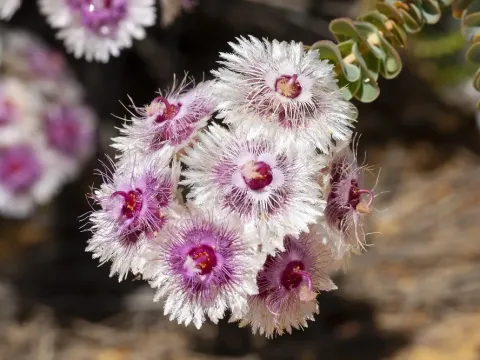
Verticordia
Verticordia
Verticordia is a diverse genus of evergreen shrubs belonging to the Myrtaceae family. Native predominantly to Western Australia, these plants are highly prized for their intricate, feather-like flowers and compact habit.
What the section contains


Verticordia
Botanically, they are woody plants with small, often sclerophyllous leaves adapted to harsh environmental conditions. The flowers exhibit a wide range of colors, from vibrant yellows and reds to soft pinks and whites, often persisting on the plant for extended periods.
Climatic requirements demand a Mediterranean-style environment with long, dry summers and mild winters. They are strictly sensitive to high humidity and require constant airflow to prevent fungal proliferation, making site selection a critical factor for commercial success.
Soil management must focus on providing an exceptionally well-drained medium. In cultivation, sandy or gravelly soil mixtures with minimal phosphorus content are preferred, as these plants have evolved to thrive in nutrient-poor Australian soils.
The primary agricultural use of Verticordia is for the professional cut flower market. Because of their unique appearance and long vase life, they are increasingly used in high-end floral designs and luxury wedding arrangements.
The most significant threat to Verticordia cultivation is root rot caused by Phytophthora species. These pathogens thrive in waterlogged or poorly aerated soils, necessitating precise irrigation management and high-quality drainage systems.
Insect pests include aphids and mealybugs, which can cluster on new growth and developing buds. Integrated pest management strategies, emphasizing early detection and biological controls, are essential for maintaining healthy plant stands.