
Golden Penda
Xanthostemon chrysanthus
Description
Growing requirements
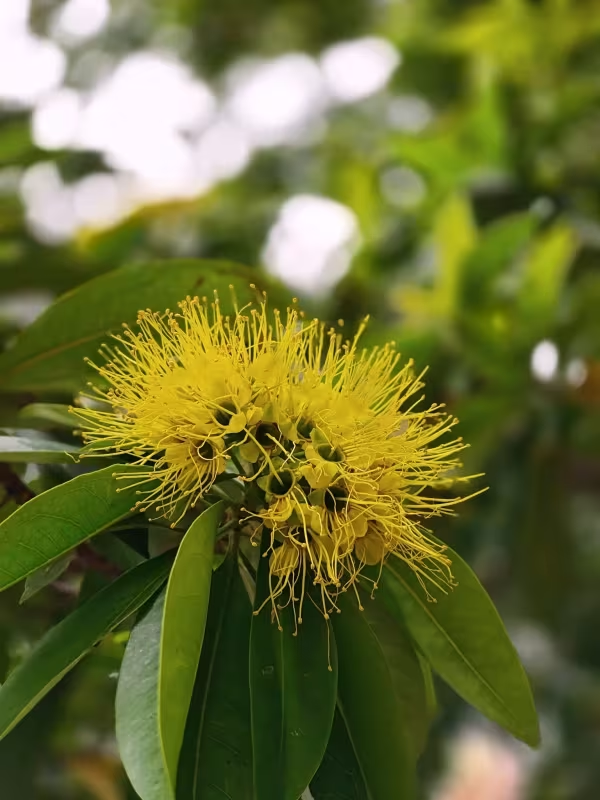
Golden Penda (Xanthostemon chrysanthus) is a magnificent evergreen tree native to the tropical rainforests of northern Queensland, Australia. As a member of the Myrtaceae family, it is highly valued for its striking appearance and dense foliage.
The plant thrives in warm, humid climates and is intolerant of frost. In outdoor cultivation, it prefers full sun exposure, although young specimens require partial shade to protect them from excessive heat during the establishment phase.
Ideal soil conditions include well-drained, fertile, and slightly acidic soil rich in organic matter. Proper drainage is crucial to prevent root rot, which is the most common issue encountered by growers in less-than-ideal soil conditions.
Watering should be consistent throughout the growing season, especially for container-grown plants. During the cooler months, the frequency of irrigation should be reduced to prevent the soil from remaining constantly waterlogged.
The tree serves primarily as an ornamental specimen in landscaping and urban planning. It is frequently planted for its ability to attract native nectar-feeding birds, making it a valuable addition to eco-friendly residential gardens.
Main diseases and pests
Fungal diseases, particularly leaf spot and root decay, are significant threats to Golden Penda, especially in environments with poor airflow. Maintaining proper spacing and pruning helps to improve air circulation within the canopy.
Common pests include scale insects and mealybugs, which are often found on the undersides of leaves or in branch axils. Early detection is key, and physical removal or organic insecticidal soap can effectively manage small infestations.
Spider mites can become a nuisance, particularly in dry indoor environments or greenhouses. Increasing relative humidity and regular misting are effective preventative measures against these tiny pests.
Nutrient deficiencies, particularly involving iron, can lead to chlorosis. Regular soil testing and the application of micronutrient-rich fertilizers ensure that the tree maintains its vibrant green leaf color.
Overall, the health of Xanthostemon chrysanthus depends on a disciplined maintenance program. Removing dead wood and ensuring the tree is not stressed by extreme climate changes contributes to its long-term vitality.