
Thryptomene australis
Thryptomene australis
Thryptomene australis is a perennial evergreen shrub belonging to the Myrtaceae family, native to the arid regions of Western Australia. The species is highly adapted to nutrient-poor, sandy environments, which defines its specific requirements when cultivated for commercial or ornamental purposes.
What the section contains
Thryptomene australis
The plant thrives in well-drained, sandy, or loamy soils with a neutral to slightly acidic pH. Poor drainage is the most significant limiting factor for its growth, as the root system is highly susceptible to waterlogging and subsequent rot; therefore, raised beds or sandy substrate modifications are often essential.
Ideal climatic conditions mimic a Mediterranean environment, characterized by mild winters and dry, warm summers. While Thryptomene australis can withstand light frosts down to -5°C, it requires full sunlight to ensure healthy development and prolific flower production.
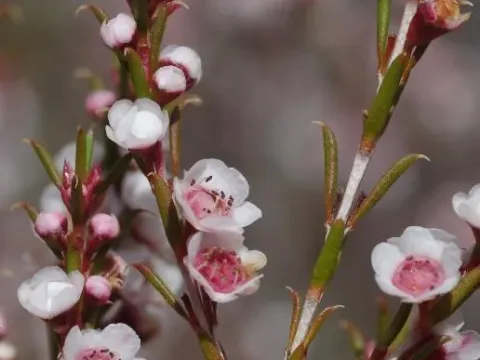
Botanically, it forms a compact, dense shrub with small, linear, oil-gland-bearing leaves. The plant is prized for its abundant, tiny, cup-shaped white or pale pink flowers that cover the branchlets in late winter and spring, creating a delicate, mass-flowering effect.
In terms of management, the shrub requires minimal fertilization, particularly low-phosphorus diets, as members of the Myrtaceae family often show sensitivity to excessive phosphorus levels. Pruning after flowering is encouraged to maintain a dense, bushy form and prevent the shrub from becoming woody and leggy.
The primary commercial use of Thryptomene australis is in the floriculture industry, where it serves as a high-quality decorative filler for bouquets and arrangements. Its longevity and delicate appearance make it a sought-after botanical product in international markets.
Harvesting is performed by cutting the flowering stems during the late bud stage or when the flowers are partially open to ensure optimal shelf life. Using sharp, clean secateurs is necessary to ensure precise cuts and promote vigorous regrowth from the remaining nodes.
Post-harvest handling involves rapid cooling and careful moisture management to maintain stem turgor. Properly treated branches can last up to two weeks in a vase, providing significant value for florists looking for long-lasting, natural-looking botanical accents.
Beyond floriculture, the plant is used in xeriscaping and sustainable landscaping, particularly in regions with limited water resources. Its ability to tolerate drought once established makes it an excellent choice for low-maintenance garden designs and native-style plantings.
For greenhouse cultivation, management includes climate control to prevent humidity build-up, which can decrease the quality of the harvested stems. Regular thinning of the canopy is practiced to allow light penetration and air circulation throughout the shrub.
The most critical threat to Thryptomene australis is root rot, particularly caused by Phytophthora species, which thrive in waterlogged soil conditions. Proactive management of irrigation systems and soil aeration is the primary defense strategy for agricultural producers.
Pests such as spider mites and scale insects can cause significant damage in protected environments. These pests proliferate in the dry, warm air of greenhouses, necessitating regular monitoring and timely application of targeted biological or chemical control agents.
Powdery mildew is a potential threat when airflow is restricted or humidity is excessively high. To minimize this risk, growers maintain spacing between plants and use fans to improve air exchange, preventing the build-up of stagnant air pockets.
Deficiencies or imbalances in micronutrients can lead to leaf yellowing (chlorosis). Because this plant is native to nutrient-poor soils, fertilization should be applied sparingly, focusing on high-quality organic or specialized slow-release fertilizers designed for Australian native plants.
Integrated Pest Management (IPM) is the recommended approach for commercial cultivation. By introducing beneficial predators and monitoring environmental variables, growers can effectively manage pests while ensuring the crop meets stringent export quality standards and residue requirements.