
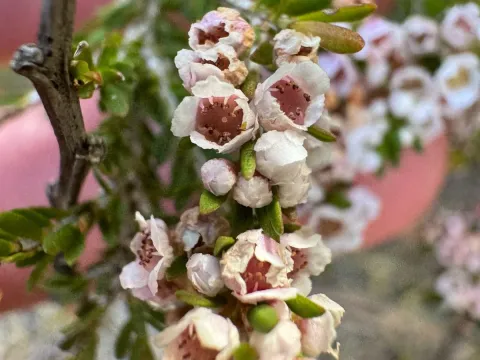
Thryptomene saxicola
Thryptomene saxicola
Thryptomene saxicola, commonly known as Rock Thryptomene, is an evergreen shrub belonging to the Myrtaceae family. Native to Western Australia, this plant is adapted to arid and semi-arid conditions, thriving in rocky, well-drained soils that characterize its natural habitat.
What the section contains
Thryptomene saxicola
In terms of soil requirements, the plant demands excellent drainage to prevent root rot, which is a common issue for species within this family. Ideal growing substrates are sandy or gravelly with a slightly acidic to neutral pH, ensuring that water passes through the root zone quickly.
This crop is highly light-demanding, requiring full sun to partial shade exposure to bloom profusely. In non-native climates, it is typically cultivated in greenhouses or controlled nursery environments, as it lacks hardiness to severe frost and high humidity.
Agronomic management relies heavily on precise pruning schedules. By cutting back the stems immediately after the flowering cycle, producers encourage dense vegetative growth and ensure a high yield of flowering branches for the subsequent harvest season.
The primary economic value of Thryptomene saxicola lies in the commercial cut flower market. The delicate, tiny flowers and fine foliage provide excellent aesthetic value in bouquets, being appreciated by florists for their longevity and resilient vase life.
The most significant threats to the crop include fungal pathogens that attack the root system, often triggered by waterlogged conditions and poor air circulation in the root zone. Proper soil management and drainage systems are critical for disease prevention.
Pest issues often involve sap-sucking insects such as aphids, scale insects, and spider mites. These pests can cause chlorosis or physical damage to the delicate branches, requiring timely interventions with appropriate pesticides and regular monitoring of the plant health.