
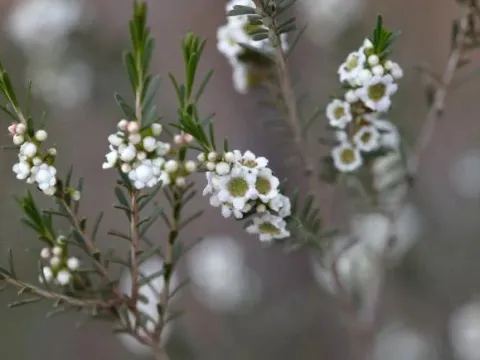
Thryptomene hexandra
Thryptomene hexandra
Thryptomene hexandra is an evergreen decorative shrub belonging to the Myrtaceae family. Native to Australia, it is well-adapted to environments featuring sandy or rocky soils with excellent drainage, mimicking its natural habitat.
What the section contains
Thryptomene hexandra
Cultivation requires sunny locations protected from harsh, cold winds. The plant is drought-tolerant, which makes it suitable for regions with Mediterranean climates; however, it thrives best when provided with consistent yet moderate moisture levels during the active growing phase.
The optimal temperature range for development is between 18 and 25 degrees Celsius. Proper soil aeration is critical, as stagnant water near the roots can lead to rapid fungal infections and potential plant loss. Excellent drainage is non-negotiable for success.
The soil should be neutral to slightly acidic. For professional nursery production, light, well-aerated sandy loams enriched with organic matter are preferred. Notably, the plant is sensitive to high phosphorus levels, so fertilizer selection must be made with caution.
Botanically, the species is characterized by small leathery leaves and profuse flowering. During its peak blooming season, the bush is covered with miniature flowers, which enhances its aesthetic appeal and professional utility in landscape design and the floral market.
The primary commercial application for Thryptomene hexandra is within the cut flower and decorative foliage industry. The delicate, flower-laden stems are highly valued by florists for their longevity in vase arrangements and their ability to complement a variety of bouquet styles.
Harvesting is typically performed by hand during the bud-burst stage to maximize the vase life of the stems. Proper handling is required to avoid damaging the slender branches, which remain the industry standard for high-quality floral filler.
Post-harvest storage requires temperatures between 4 and 6 degrees Celsius. Under clean conditions and proper humidity control, the harvested stems can retain their market quality for several weeks, making them a desirable product for international floral trade.
Controlled environment cultivation allows for year-round production, ensuring a steady supply for the market. By manipulating light and temperature in greenhouse settings, producers can synchronize blooming cycles with periods of high demand.
In addition to cut flower production, the shrub is used in landscaping. It responds well to regular pruning, which facilitates the creation of compact, uniform shapes, making it a versatile choice for hedges and ornamental borders in warm-climate gardens.
Root rot is the most significant threat to Thryptomene hexandra, usually caused by overwatering or poor soil drainage. Preventive measures involve rigorous irrigation scheduling and ensuring the substrate is lightweight and well-draining.
In terms of pests, scale insects and mealybugs can occasionally affect the branches. Frequent monitoring and the timely application of systemic insecticides or biological controls are sufficient to maintain healthy plant populations in commercial settings.
In enclosed greenhouse environments, poor ventilation can lead to the development of powdery mildew or gray mold. It is essential to manage relative humidity levels and maintain good air circulation to mitigate these fungal risks.
Iron deficiency, often manifesting as leaf chlorosis, can occur if soil pH levels fluctuate significantly. The application of chelated iron supplements is an effective corrective measure, though precise dosage must be observed to avoid nutrient imbalances.
Overall, Thryptomene hexandra is a resilient species when its specific environmental requirements are met. By providing abundant sunlight, clean air, and avoiding waterlogged conditions, growers can successfully minimize the impact of common diseases and pests.