
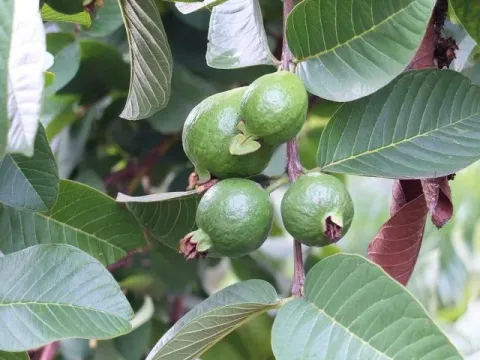
Guava
Psidium
Guava (Psidium) belongs to the Myrtaceae family and is typically propagated through seeds or vegetative methods like grafting. Seeds should be sown immediately after extraction as they lose viability rapidly.
What the section contains


Guava
For successful germination, a temperature range of +25°C to +28°C is required. In commercial orchards, grafting onto selected rootstocks is preferred to ensure uniformity and early fruiting.
Seedlings are best transplanted at the onset of the rainy season to facilitate root establishment and reduce heat stress on young plants.
Standard orchard spacing varies from 5x5 to 6x6 meters, allowing sufficient space for canopy development and sunlight penetration for all branches.
Upon germination, which takes several weeks, seedlings require careful hardening before being exposed to direct, intense sunlight in the field.
Guava is a heat-loving crop thriving in tropical and subtropical climates, with an ideal temperature range of +23°C to +28°C throughout the year.
The plant grows best in deep, well-drained loamy soils with a pH between 5.0 and 7.0, although it can tolerate various soil textures if drainage is adequate.
Good drainage is crucial, as waterlogged conditions often lead to root rot and poor tree health, significantly reducing the lifespan of the orchard.
High light intensity is essential for fruit set and flavor development; therefore, trees should be planted in open areas with full sun exposure.
Consistent irrigation is required during the dry season, but water application must be managed carefully to avoid fruit splitting during the ripening stage.
Guava trees typically start producing fruit within 3 to 4 years of planting, with yield increasing significantly as the tree reaches maturity.
A well-maintained mature tree can yield between 50 and 150 kg of fruit per season depending on the cultivar and the quality of agricultural practices.
Strategic pruning is essential to promote branching and maintain a manageable height for efficient harvesting and pest management activities.
Regular fertilization with nitrogen, phosphorus, and potassium supports high production levels and maintains the vigor of the tree over many years.
In high-productivity systems, orchards are replaced or rejuvenated after 15–20 years to ensure consistent quality and output for the market.
The primary pest affecting guava production is the fruit fly, which lays eggs inside the developing fruit, leading to significant post-harvest losses.
Anthracnose is a common fungal disease that causes spotting and rotting of fruits, especially in regions with high humidity and frequent rainfall.
Integrated pest management, including pheromone traps and removing infected fruits from the orchard floor, is the most effective way to control infestations.
Root-knot nematodes can severely limit the uptake of water and nutrients, so growers must prioritize soil health and use resistant rootstocks where available.
- Fruit fly (Bactrocera dorsalis)
- Anthracnose (Colletotrichum gloeosporioides)
- Root-knot nematodes
- Mealybugs
Harvesting guava is a manual process due to the delicate skin of the fruit, which bruises easily and is prone to damage during mechanical handling.
Maturity is indicated by a change in skin color and the development of a strong, characteristic aroma, which signals the ideal sugar content.
For long-distance shipping, fruits are harvested at the mature-green stage, providing sufficient shelf life for transport and retail distribution.
Post-harvest handling involves careful sorting and cooling to minimize respiration rates and prevent the rapid softening of the fruit tissues.
Because the fruit has a relatively short shelf life, rapid logistics from the farm to the market or processing facility are essential for profitability.