
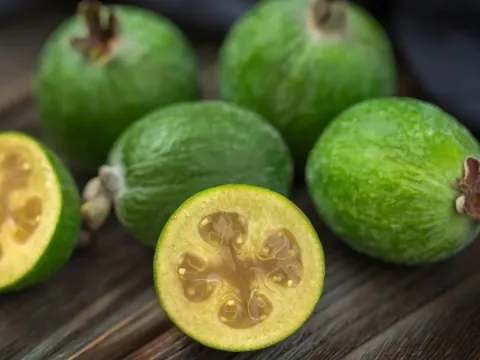
Feijoa
Acca
Feijoa (Acca sellowiana), commonly known as pineapple guava, is an evergreen shrub or small tree belonging to the Myrtaceae family. It is native to the highland areas of southern Brazil, eastern Paraguay, Uruguay, and northern Argentina.
What the section contains

Feijoa
This crop is highly adapted to subtropical climates. While it can withstand occasional frost down to -10°C, it thrives best in regions with long, warm summers and mild winters, which are essential for proper fruit development and ripening.
Regarding soil requirements, feijoa prefers well-drained, fertile soil with a slightly acidic to neutral pH level. It is relatively drought-tolerant once established, but regular irrigation is necessary during the flowering and fruit-setting stages to ensure optimal yield.
The plant is known for its beautiful, edible flowers featuring long, red, prominent stamens. Beyond its fruit production, the species is highly valued in horticulture for its ornamental foliage, which maintains a deep green color with a silvery underside throughout the year.
Agricultural management includes pruning to maintain an open canopy, which improves air circulation and sunlight penetration. This practice is crucial to prevent the humidity buildup that often leads to fungal infections in dense branches.
The yield of feijoa is highly dependent on the variety and local climatic conditions. A healthy, mature tree can produce significant quantities of fruit annually, with average harvests ranging between 20 and 40 kilograms per tree under intensive management.
The fruit is a berry with a fragrant, pineapple-mint flavored pulp. It is commercially processed into juices, jellies, and jams, or consumed fresh. The nutrient density, particularly the high iodine content, makes it a valuable health-oriented produce.
Feijoa is relatively resistant to many pests, but it can be susceptible to soft scales and mealybugs. These insects can reduce the vigor of the plant by sucking sap from young shoots, necessitating integrated pest management approaches.
Fungal issues, such as leaf spot or fruit rot, may arise in overly humid environments. Maintaining proper spacing between trees and implementing good sanitary practices in the orchard effectively minimizes these risks.
Harvesting feijoa typically occurs in late autumn or early winter. The fruit is usually harvested as it begins to drop to the ground, which is the most reliable sign of peak maturity and optimal flavor profile.
Care must be taken during the collection process, as mature fruit is susceptible to bruising and internal damage. Post-harvest, the fruit should be kept in a cool environment, as it tends to ripen quickly and has a relatively short shelf life at room temperature.