
Cattley Guava
Psidium cattleianum Sabine var. cattleianum
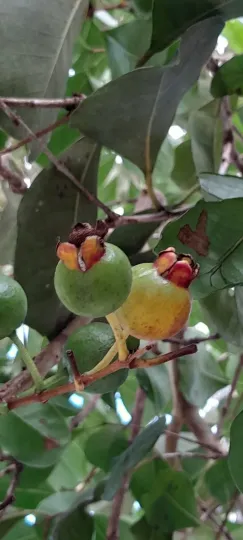
Description
Growing requirements
Cattley Guava (Psidium cattleianum), also known as strawberry guava, is an evergreen shrub or small tree belonging to the Myrtaceae family. Originally from Brazil, it has become a popular crop in many tropical and subtropical regions worldwide.
The plant thrives in full sun but adapts well to partial shade. It is significantly more cold-tolerant than the common guava, making it suitable for regions that experience occasional light frosts or cooler winter temperatures.
Ideal soil for this culture is well-drained, fertile, and slightly acidic. It performs well in various soil types, but heavy clay soils should be amended with organic matter to improve drainage and root aeration.
Water requirements are moderate, but consistent moisture is necessary during the fruit development stage. In container gardening, ensure pots have drainage holes to prevent waterlogging, which the species dislikes.
Standard agrotechnical practices involve regular pruning to manage height and improve air circulation within the canopy. This prevents excessive humidity buildup and encourages the formation of new, fruit-bearing wood.
Yield
The yield of Cattley Guava is quite productive given the compact size of the tree. Under optimal conditions, a mature tree can produce a substantial harvest of small, round, thin-skinned fruits with deep red color.
The fruit is highly prized for its sweet-tart, strawberry-like flavor. It is widely used in commercial food processing, including the production of jams, juices, and syrups, adding value to the agricultural output.
Main diseases and pests
Common pests include scale insects and mealybugs, which can cluster on leaves and stems. Integrated pest management, focusing on biological controls and horticultural oils, is effective for these infestations.
Fungal issues such as leaf spot and anthracnose may occur in humid environments. Ensuring proper spacing between trees and avoiding overhead irrigation can significantly reduce the incidence of these pathogens.
Harvesting
Harvesting should occur when fruits reach their peak color. The berries are hand-picked when they soften slightly, ensuring they are at the optimal stage of sweetness and flavor maturity for the market.