
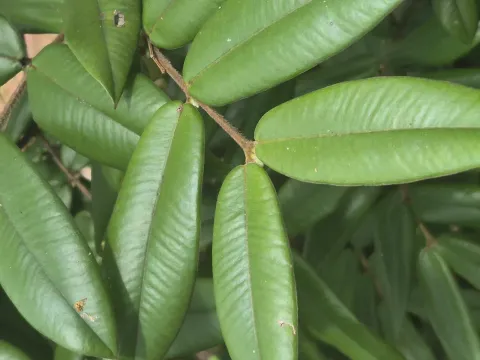
Jaboticaba
Myrciaria
Jaboticaba (Myrciaria cauliflora) is a unique member of the Myrtaceae family, renowned for its trunk-borne fruit, a phenomenon known as cauliflory. Native to the Atlantic Forest regions of Brazil, this plant thrives in warm, humid climates characterized by high rainfall and fertile, deep soils.
What the section contains


Jaboticaba
To ensure optimal development, Jaboticaba requires a site with filtered sunlight in early stages, transitioning to full sun as the tree matures. The ideal temperature range is between 20°C and 30°C, and the plant has very limited cold tolerance, requiring protection against any freezing temperatures.
The soil should be slightly acidic, rich in organic matter, and well-draining. Because the root system is sensitive to waterlogging, it is crucial to avoid heavy clay soils that retain excess moisture. Regular irrigation is vital, as the tree cannot tolerate prolonged drought periods.
Agrotechnical practices involve yearly light pruning to maintain canopy health and ensure sufficient light reaches the inner bark where the fruit develops. Fertilizer applications should focus on balanced NPK ratios with added trace minerals, applied consistently throughout the growing season.
Economically, the fruit is highly prized for its sweet, grape-like flavor and nutritional content, specifically high antioxidant levels. Due to rapid fermentation post-harvest, the industry focuses on on-site processing into jams, jellies, wines, and artisanal spirits.
The most common disease affecting Jaboticaba is rust caused by fungi, which appears as small spots on the foliage. Maintaining adequate spacing between trees and ensuring good air circulation is the best preventative strategy against such infections.
Pests such as scale insects, aphids, and mealybugs are major threats, particularly in greenhouses or protected environments. Infestations lead to stunted growth and yellowing of the leaves, requiring prompt intervention with systemic or contact-based insecticides.
Root rot, often a consequence of poor drainage or overwatering, is a serious threat that can kill the tree quickly. Soil monitoring and the use of raised beds or proper drainage layers are essential to prevent this issue from arising in cultivation.
Spider mites are frequently encountered during hot and dry spells. Increasing local humidity and using horticultural soaps can effectively control these populations without damaging the delicate balance of the tree's foliage.
Consistent monitoring and early detection are key to managing threats. By removing infested parts and applying preventive treatments during high-risk seasons, producers can maintain a healthy, productive grove of Jaboticaba.