
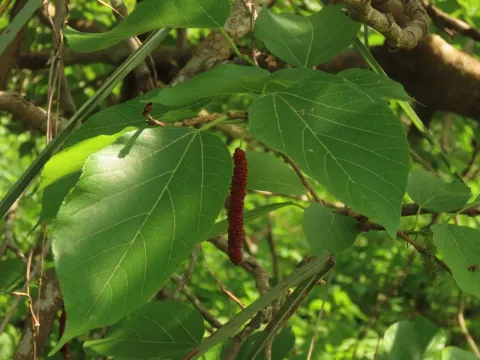
Long mulberry
Morus macroura
The long mulberry (Morus macroura) belongs to the Moraceae family. It is an impressive tree native to the Himalayan region and parts of Southeast Asia, known for its distinct fruit shape.
What the section contains
Long mulberry
This species thrives in warm climates and requires full sunlight to produce quality fruit. It is sensitive to harsh frosts, especially during its juvenile growth stage.
The soil should be deep, fertile, and possess excellent drainage properties. While the tree can adapt to various soil types, it performs best in slightly acidic to neutral loamy soils.
Consistent moisture is vital during the growing season. While established trees show some drought tolerance, supplemental watering during fruit development is necessary for yield.
Pruning is essential to manage the tree's size and encourage horizontal growth. Regular maintenance of the canopy improves light penetration and ensures better air circulation.
The yield consists of exceptionally long fruits, often exceeding 10 centimeters. They are highly prized for their sweet flavor, balanced acidity, and aromatic profile.
The tree has multiple uses: as a commercial source of high-quality berries for fresh consumption, processing, or as foliage for the traditional sericulture industry.
Common plant health issues include leaf spot diseases and powdery mildew. These are often linked to high humidity levels and lack of proper canopy ventilation.
Insects like scale insects and spider mites are frequent pests. Implementing integrated pest management strategies is recommended to maintain the tree's health and productivity.
Harvesting requires care due to the delicate nature of the long catkins. The fruit should be picked when fully ripe to ensure maximum sweetness and shelf life.