
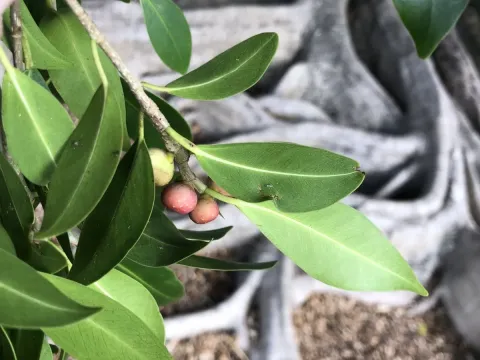
Hill's Fig
Ficus hillii
Hill's Fig (Ficus hillii) is a prominent member of the Moraceae family, native to the tropical and subtropical regions of Australia. This evergreen species is widely cultivated for its ornamental value and adaptability.
What the section contains
Hill's Fig
The culture thrives in warm environments with temperatures consistently between 20°C and 28°C. It requires protection from sudden thermal shifts and cold drafts, which can cause significant physiological stress to the tree.
Soil requirements involve a nutrient-rich, well-draining potting mix that allows for excellent aeration. Maintaining a neutral to slightly acidic pH level is essential for the effective uptake of micronutrients.
In terms of lighting, Ficus hillii performs best under bright, indirect sunlight. While it can tolerate partial shade, too little light leads to leaf drop and a loss of the dense canopy characteristic of healthy specimens.
Watering practices should be consistent, ensuring that the soil remains moist but never waterlogged. During the peak growing season, the tree benefits from periodic fertilization with a balanced NPK supplement.
Spider mites are the most notorious pests for this crop, often proliferating rapidly in low-humidity environments where they suck sap from the underside of the leaves.
Scale insects frequently attach themselves to stems and leaf undersides, appearing as small bumps; if left untreated, they can significantly weaken the overall vitality of the plant.
Root rot is a critical threat caused by overwatering or poor drainage systems. It is characterized by yellowing leaves and a softening of the stem base, often leading to rapid plant decline.
Fungal leaf spots can occur when the foliage remains wet for extended periods in environments with poor air circulation, necessitating better spacing and ventilation.
Regular monitoring and the application of integrated pest management strategies, including neem oil or systemic insecticides, are vital for maintaining a healthy and robust crop.