
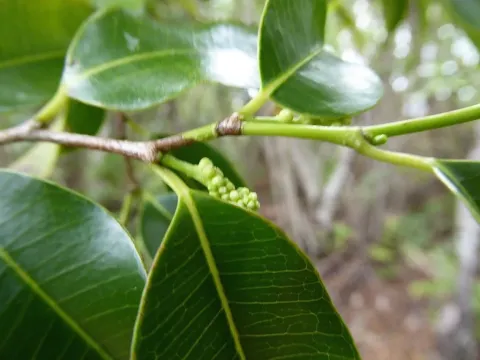
Maillardia
Maillardia
Maillardia is a genus of evergreen trees belonging to the family Moraceae. These plants are native to the Mascarene Islands in the Indian Ocean, which dictates their strict requirements for a tropical climate and high humidity.
What the section contains

Maillardia
To thrive, Maillardia requires consistent warm temperatures throughout the year. It does not tolerate frost or cold drafts, making it suitable primarily for tropical regions or specialized botanical greenhouses that can replicate its natural habitat.
Soil requirements for Maillardia include well-drained, nutrient-rich substrates. Because the genus is sensitive to root rot, the soil must allow for excellent air circulation while retaining the necessary moisture levels for growth.
Like many members of the Moraceae family, Maillardia possesses latex-producing cells. This biological trait is an important aspect to consider when managing the trees, as any mechanical damage to the bark or foliage triggers the release of this sticky sap.
The plant generally prefers bright, indirect light. In its natural forest environment, it is often found in the understory or edge areas, so it requires protection from harsh, direct sunlight that could scorch its leaves.
The agricultural importance of Maillardia is limited, as the genus is not cultivated for food or industrial raw materials. Instead, its primary value lies in scientific research and the preservation of endemic biodiversity.
In landscaping, some species of Maillardia are utilized for their ornamental value in tropical gardens. Their dense foliage and interesting growth habit make them suitable for reforestation projects aimed at restoring local island ecosystems.
Industrial wood production is not a viable path for this genus due to the rarity of its species. The conservation status of Maillardia prioritizes its protection over any commercial extraction of timber.
Yield metrics, such as fruit or leaf output, are not standardized for this genus since it is not a traditional field crop. Current efforts are focused on seed collection and maintaining genetic diversity within nursery settings.
The economic potential of Maillardia is tied to the niche market of rare tropical ornamental plants and ecotourism, where it serves as a representative of the unique Mascarene flora.
The most significant threat to Maillardia populations is habitat loss caused by urban development and agricultural expansion. This displacement restricts the plant to small, fragmented pockets of its original range.
Fungal infections are a primary concern in nursery environments where humidity levels can fluctuate. Proper ventilation is essential to prevent the spread of diseases that can weaken the root system and bark of the tree.
Insects, such as aphids or scale insects, pose a threat to the succulent new growth of Maillardia. Integrated pest management strategies are often required to control these populations without harming the plant's delicate tissues.
Invasive plant species are a major threat in the wild, as they outcompete slow-growing native species like Maillardia. Without active management and weed control, these invasive species can completely suppress the regeneration of Maillardia forests.
Effective management requires a proactive approach to soil health and sanitation. By ensuring high hygiene standards during cultivation, growers can significantly mitigate the risk of disease outbreaks and maintain plant health.