
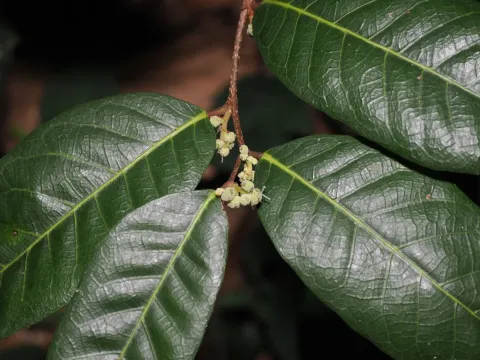
Malaisia scandens
Malaisia
Malaisia scandens is a unique monotypic genus of woody vines belonging to the Moraceae family. It is native to the tropical forests of Australia, Southeast Asia, and several Pacific islands, where it thrives in lush, humid environments.
What the section contains

Malaisia scandens
This climbing plant requires a stable tropical climate to reach its full potential. It is sensitive to extreme temperature fluctuations and frost, making it suitable primarily for warm, protected zones or greenhouses where environmental parameters can be strictly controlled.
In terms of soil requirements, it prefers fertile, well-draining substrates rich in organic matter. Proper drainage is crucial for preventing root rot, especially given the plant's natural preference for moist but well-aerated forest floors.
Botanically, it is characterized by its latex-containing stems and foliage, which is a hallmark feature of the fig family. The plant uses specialized twining behaviors and adventitious structures to climb towards the canopy to capture sufficient sunlight for its physiological processes.
Economically, the plant has historically served indigenous communities as a source of fiber. Its bark is remarkably tough and flexible, making it ideal for the manufacture of cordage, fishing nets, and various traditional crafts. It is also grown in tropical landscapes for its attractive, dense foliage.
Common horticultural threats include various scale insects and spider mites that thrive in warm, sheltered environments. If left unmanaged, these pests can significantly weaken the foliage and reduce the vigor of the plant, necessitating periodic inspection and integrated pest management.
Fungal issues such as leaf spot or root rot are typically associated with poor air circulation or over-saturation of the soil. Maintaining optimal hygiene around the plant and ensuring proper drainage are the primary methods for preventing these common phytopathological problems.