
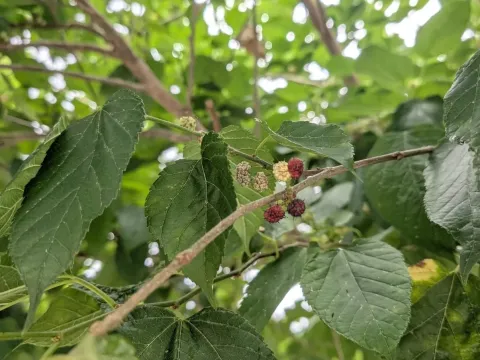
Japanese mulberry
Morus bombycis
Japanese mulberry (Morus bombycis) is a deciduous species of the Moraceae family, widely cultivated for its high-quality foliage used in sericulture. Propagation is generally performed through seeds or vegetative cuttings to ensure the preservation of specific varietal traits.
What the section contains
Japanese mulberry
Seeds should be cold-stratified for approximately two months before sowing in spring to break dormancy and ensure high germination rates. The sowing depth should be shallow, typically around 1-2 centimeters in well-prepared nursery soil.
Vegetative propagation, specifically using greenwood cuttings, is preferred for industrial plantations to maintain consistency. Cuttings are placed in a controlled environment with high humidity and stable temperatures to encourage root development.
Seedlings are transplanted to the field during the early spring season, just before bud break. This allows the root system to establish itself effectively before the onset of the hot summer months, reducing mortality rates.
Planting density is determined by the intended purpose: trees for leaf harvesting are spaced closely to maximize biomass yield per hectare, whereas trees intended for fruit production require significantly more spacing for optimal canopy development.
The species thrives in well-drained, fertile loamy or sandy soils. It is highly sensitive to waterlogging, as stagnant water significantly increases the risk of root rot and overall plant decline, which is critical to avoid in plantation sites.
Morus bombycis prefers a warm, temperate climate. While it exhibits moderate drought tolerance once established, consistent irrigation is essential during the active growing season to maximize leaf production for silkworm feeding.
Full sun exposure is vital for the health of the tree and the quality of its leaves. Sites with poor light conditions lead to slower growth rates and decreased nutritional value of the foliage, directly impacting silkworm health.
A balanced fertilization program, with an emphasis on nitrogen during the spring and early summer, is necessary to support rapid foliage growth. Micronutrient balance should also be monitored to ensure long-term vitality.
Proper pruning is a cornerstone of mulberry agrotechnics. Regular canopy management helps maintain a desired tree size, promotes the growth of tender new shoots, and facilitates the harvesting process for both leaves and fruit.
The primary economic value of Japanese mulberry lies in its leaf yield. Its leaves are considered the gold standard for feeding Bombyx mori (silkworm) larvae due to their optimal nutrient profile and palatability.
Annual yields are influenced by the age of the plantation, soil quality, and the intensity of pruning practices. Productive plantations can yield significant amounts of fresh leaf biomass, meeting the demands of large-scale sericulture operations.
In addition to foliage, the tree produces edible fruits known as mulberries. These berries are highly prized for their sweetness and antioxidant content, making them a viable secondary product for both fresh consumption and food processing.
Peak yield is typically attained once the trees reach 10-15 years of age. Growers must balance the extraction of leaf biomass with the tree's overall stress level to ensure a long and productive lifespan for the plantation.
Harvested products require careful handling. Leaves should be kept in ventilated containers to prevent wilting or fermentation, while fruits need rapid cooling or processing to preserve their delicate structure and nutritional integrity.
Bacterial blight is one of the most significant threats to Morus bombycis, often manifesting as leaf spots and shoot dieback. Prevention involves ensuring proper air circulation within the canopy and removing infected plant tissue promptly.
Powdery mildew can become an issue in regions with high humidity. Cultural controls, such as thinning the canopy to improve light penetration and airflow, are the primary methods for managing this fungal infection effectively.
Pests such as spider mites and various leaf-eating insects pose a constant risk, particularly in intensive cultivation environments. These pests can severely damage the foliage, rendering it unsuitable for silkworm feeding.
Root system issues can emerge if drainage is poor. To mitigate this risk, it is essential to conduct soil analysis prior to planting and to avoid low-lying areas prone to flooding or soil compaction.
Integrated Pest Management (IPM) is the recommended approach for this crop. By utilizing biological controls and maintaining rigorous sanitation protocols, growers can minimize reliance on chemical pesticides while maintaining high yields.
The harvesting of leaves is synchronized with the silkworm development cycle. Harvesting should occur during cool periods, such as early morning or late evening, to ensure the leaves maintain their maximum fresh weight and nutritional properties.
Fruit harvesting is performed upon full ripening, as mulberries are highly perishable. Commercial growers often utilize mechanical shakers to drop fruit onto collection frames, significantly increasing speed and efficiency.
Immediate processing or refrigerated storage is necessary for fruit after harvesting to maintain quality. Leaf biomass should be kept out of direct sunlight and transported in breathable containers to prevent moisture loss.
Mechanical harvesters designed for orchard crops can be adapted for mulberry plantations. This technology streamlines the gathering process, especially for large-scale operations where manual labor costs are a significant factor.
Final orchard maintenance post-harvest includes clearing debris and applying necessary nutrients to help trees recover before the onset of dormancy. Proper end-of-season management is critical for sustaining long-term plantation health.