
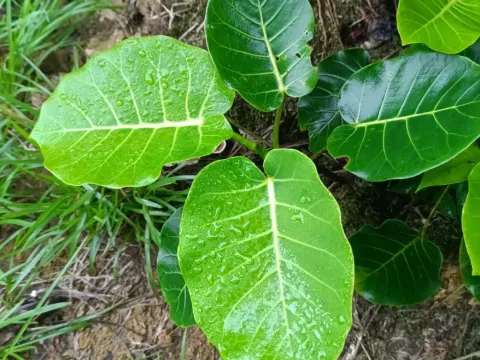
Ficus nymphaeifolia
Ficus nymphaeifolia
Ficus nymphaeifolia is a tropical tree species belonging to the Moraceae family, native to the rainforests of Central and South America. It is characterized by its large, heart-shaped leaves that resemble water lilies, giving it a distinctive aesthetic appeal.
What the section contains
Ficus nymphaeifolia
In its natural habitat, it often begins as an epiphyte, utilizing other trees for support before developing its own robust trunk. When cultivated, it requires a spacious environment to accommodate its significant growth potential and dense foliage.
The plant thrives in well-draining, nutrient-rich soil that is kept consistently moist but never waterlogged. A substrate composed of peat, perlite, and pine bark is often recommended to ensure adequate aeration for the sensitive root system.
Temperature requirements are stringent; the plant should be kept in a warm environment with temperatures ideally ranging between 22°C and 28°C. It is highly sensitive to cold drafts and should be protected from sudden environmental shifts.
Lighting should be bright and indirect to maintain leaf vibrancy and prevent scorching. Regular light pruning helps manage the shape of the canopy and encourages branching, which is essential for indoor maintenance.
The primary pests affecting Ficus nymphaeifolia include spider mites and scale insects, which frequently target the leaves and stems in low-humidity conditions.
Fungal diseases, such as leaf spot or root rot, are common indicators of poor drainage or insufficient ventilation within the growing environment.
Integrated pest management strategies involve regular cleaning of the foliage and maintaining a relative humidity level that is uncomfortable for common houseplant pests.
If an infestation occurs, manual removal followed by the application of organic insecticidal soaps or neem oil is often sufficient to control the population.
Diligent monitoring and maintaining proper plant hygiene are the best defenses against environmental stress and subsequent opportunistic pathogen attacks.