
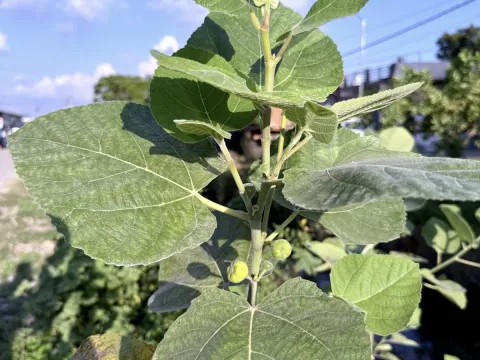
Ficus palmata
Ficus palmata
Ficus palmata, commonly known as the Punjab fig, belongs to the Moraceae family. It is a deciduous, hardy shrub or small tree that thrives in various subtropical and temperate environments, often found in mountain regions of Asia.
What the section contains
Ficus palmata
This species is well-adapted to harsh conditions and is known for its resilience to drought and poor soil quality. Its natural distribution spans from Afghanistan to India, where it grows as a resilient component of the local flora.
The cultivation of Ficus palmata requires sunny locations with well-drained soil. While it is tolerant of various soil types, it performs best in soils that are rich in organic matter and possess adequate drainage to prevent root diseases.
Agrotechnical management involves regular pruning to maintain a manageable shape and encourage fruit production. Pruning also helps in improving air circulation within the canopy, which is essential for disease prevention.
The tree is relatively low-maintenance, requiring minimal irrigation once established. However, during the initial growth phase, consistent moisture is beneficial to ensure the development of a strong and deep root system.
The fruit of Ficus palmata is a small syconium that matures into a dark purple or black color. These fruits are edible and serve as a significant nutritional source for local communities, being rich in natural sugars and fiber.
In addition to human consumption, the tree is highly valued as a forage crop. Its foliage is rich in protein and is extensively used for feeding livestock, particularly goats and sheep in mountainous grazing regions.
The wood from Ficus palmata is utilized for small-scale carpentry and fuel. Its ability to grow in challenging terrains makes it a preferred species for reforestation projects aimed at soil stabilization and erosion control.
Traditional medicine practices utilize various parts of the plant, including the milky latex and the fruits, for their therapeutic potential in treating dermatological issues and digestive ailments.
Harvesting is typically carried out manually when the fruits achieve a soft texture and deep color. Proper post-harvest handling ensures that the fruit retains its quality for fresh market consumption or drying.
Ficus palmata is susceptible to fungal infections like powdery mildew, especially in humid conditions. Managing these threats involves careful canopy thinning to ensure sufficient sunlight penetration and airflow.
Common pests such as spider mites and scale insects can affect the health of the leaves and stems. Integrated pest management strategies, including the introduction of natural predators, are recommended for large-scale cultivation.
Root-knot nematodes are a significant concern in nurseries and young orchards. Implementing soil solarization or using clean, certified nursery stock is crucial for preventing initial infestations.
Avian pests pose a challenge during the fruit-ripening season. Producers often employ protective netting to safeguard the crop and ensure that the yield remains profitable for market distribution.
Although the tree is hardy, severe late-spring frosts can damage newly emerged buds. Providing protective mulching around the base of the trunk helps in moderating soil temperature and protecting the root zone.