
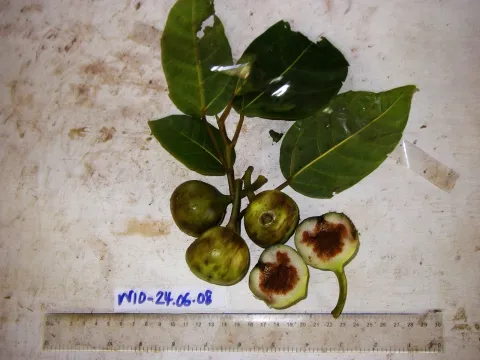
Ficus nodosa
Ficus nodosa
Ficus nodosa, commonly known as the knotty fig, is a prominent member of the Moraceae family. It is a large, evergreen tree characterized by its distinctive nodal branches and broad canopy typical of tropical forest flora.
What the section contains
Ficus nodosa
The species is native to Southeast Asia, specifically inhabiting the lush, humid environments of Indonesia and New Guinea. It thrives in regions where tropical rain forests provide stable, warm, and humid conditions year-round.
In terms of cultivation, this tree requires bright, indirect sunlight to maintain its structural integrity and leaf density. It cannot tolerate cold snaps or frost, which are detrimental to its metabolism and overall development.
The ideal soil for Ficus nodosa is a well-aerated, moisture-retentive loam that prevents root suffocation. Proper drainage is the most critical factor in its agrotechnical management, as waterlogged conditions lead to rapid decay.
Economically, the tree is primarily utilized in large-scale landscaping and reforestation projects in tropical climates. It serves as a keystone species for local wildlife, providing shelter and sustenance for numerous birds and insects.
The primary insect threats to Ficus nodosa include mites and scale insects. These pests often congregate on the undersides of leaves, extracting sap and causing yellowing or leaf distortion.
Fungal infections such as powdery mildew or rust can occur, especially in poorly ventilated nurseries. These pathogens flourish when humidity is excessively high and airflow around the canopy is restricted.
Root rot, often caused by Phytophthora species, remains the most significant threat to the plant's health in cultivation, usually triggered by poor drainage or overwatering practices.
Nutrient deficiencies, particularly regarding nitrogen and magnesium, can result in leaf drop and reduced vigor, requiring careful fertilization programs based on soil testing.
Regular monitoring for early signs of infestation and the implementation of clean pruning practices are essential to manage these threats and ensure the longevity of the tree.