
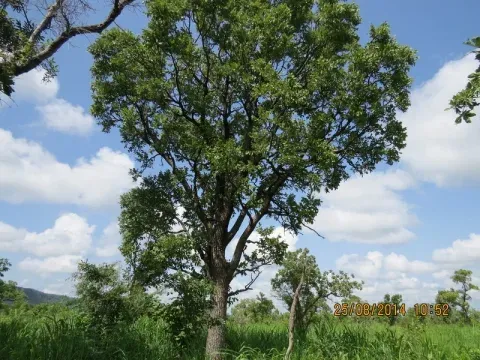
Dry Zone Mahogany
Pseudocedrela kotschyi
Pseudocedrela kotschyi, commonly known as Dry Zone Mahogany, is a deciduous tree belonging to the Meliaceae family. It is a vital species in the savannah woodlands of tropical Africa, often reaching heights of up to 20 meters with a dense, spreading canopy.
What the section contains
Dry Zone Mahogany
The native distribution of this species spans the African continent from Senegal in the west to Sudan and Uganda in the east. It is well-adapted to savanna environments characterized by significant rainfall seasonality and high annual temperatures.
This tree flourishes in full sunlight, making it highly dependent on open environments for maximum biomass accumulation. It demonstrates remarkable physiological flexibility, allowing it to withstand prolonged dry seasons by shedding its leaves to conserve internal water reserves.
Regarding soil requirements, the species thrives in deep, well-draining sandy or loamy soils. It avoids waterlogged areas, as its root system is prone to decay if exposed to stagnant moisture for extended periods, necessitating careful site selection for planting.
Economically, the species is highly valued for its durable and termite-resistant wood, which is utilized for construction and furniture making. Furthermore, its bark and roots are significant in traditional herbal medicine for treating various ailments, including malaria and digestive issues.
The primary threats to the cultivation of Pseudocedrela kotschyi include various fungal diseases that target the root system or the bark, especially when trees are planted in sites with poor drainage. Management involves monitoring moisture levels to prevent fungal proliferation.
Insect pests such as wood-boring beetles present a constant challenge to plantation health. To mitigate these risks, it is essential to maintain proper tree spacing and ensure that the plants are not under undue stress, which makes them more susceptible to infestations.