
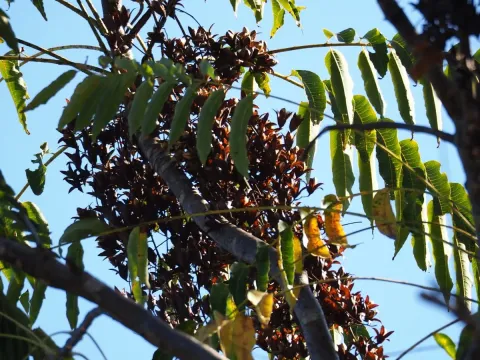
Toona
Toona (Endl.) M. Roem.
The propagation of Toona typically begins in the spring, following a period of seed stratification, which is essential to break dormancy and ensure high germination rates.
What the section contains


Toona
Seeds are sown in well-draining nursery media at a shallow depth of about 1 centimeter, requiring consistent moisture and temperatures between 20 and 25 degrees Celsius.
Once seedlings reach a height of approximately 10 to 15 centimeters, they are transplanted into individual containers to develop a robust root system before field planting.
Field transplantation is ideally conducted after the risk of late spring frost has passed, ensuring the saplings have sufficient time to acclimate before harsher seasons.
Planting density is adjusted based on the specific end-use, such as timber production, where wider spacing promotes the development of straight and high-quality trunks.
As a member of the Meliaceae family, Toona thrives in subtropical and tropical climates, requiring consistent rainfall during the primary growth periods.
The plant demands fertile, deep, and well-drained loamy soils; it is highly sensitive to waterlogging, which often leads to root rot and poor overall development.
Toona requires high levels of solar exposure for optimal canopy development, though young saplings benefit from partial shade to protect them from direct, intense sunlight.
While the tree can adapt to some variations in humidity, maintaining adequate soil moisture through mulching and irrigation is beneficial for accelerating the growth rate.
It prefers neutral to slightly acidic soil conditions and does not perform well in compacted soils that prevent root penetration or air circulation.
Toona is primarily cultivated for its high-value timber, often referred to as Chinese mahogany or red cedar, which is prized for its durability and attractive grain.
Under effective management, the tree can reach harvestable timber size within 20 to 30 years, depending on the site conditions and the specific species of Toona.
Beyond timber, the leaves of certain Toona species are harvested for consumption in various culinary traditions, providing an additional source of revenue for farmers.
The essential oils extracted from various parts of the tree are also utilized in the perfume and pharmaceutical industries, further diversifying the economic output.
Yield efficiency is significantly improved by proper pruning practices, which help maintain a single, strong leader trunk and reduce knot formations in the timber.
The most significant pest affecting Toona plantations is the shoot borer Hypsipyla robusta, which targets the apical buds and causes serious branch deformation.
Frequent infestations can severely degrade the wood quality, making pest management a top priority for silviculturists aiming to produce premium timber.
Fungal diseases are predominantly related to site selection; poor drainage frequently creates the conditions necessary for root pathogens to infect and kill young trees.
- Shoot borer larvae causing stunted growth.
- Root rot due to excessive soil moisture.
- Aphid infestations affecting young, tender foliage.
Strategic control involves using certified planting stock, monitoring for early signs of insect activity, and ensuring optimal soil drainage across the entire plantation site.