
California walnut
Juglans californica
Description
Growing requirements
The California walnut (Juglans californica) is a member of the Juglandaceae family. It is a deciduous shrub or small tree native to Southern California. In the context of modern agriculture, it is highly valued for its genetic traits, particularly its resilience and suitability as a robust rootstock for commercial varieties of Juglans regia.
This species thrives in deep, well-drained soils and is well-adapted to Mediterranean climates characterized by wet winters and dry summers. While it exhibits notable drought tolerance once established, irrigation is essential during the initial growth phase to ensure strong root development. It requires full sunlight to maintain canopy density and prevent the premature shedding of internal leaves.
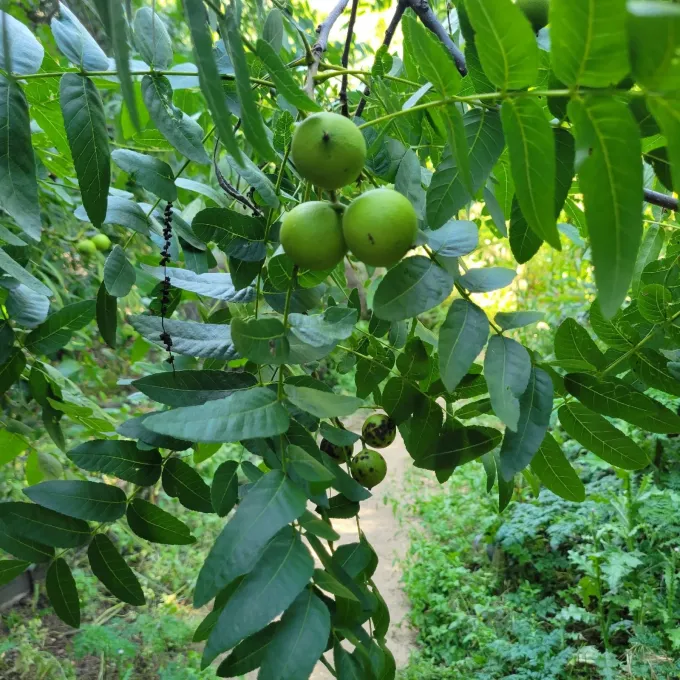
Botanically, Juglans californica is characterized by its rough, furrowed bark and compound, odd-pinnate leaves. The fruits are relatively small, globose, and possess a thick, hard shell. Unlike many other walnut species, it often develops a multi-stemmed growth habit, which is a key identifying feature in its natural habitat across canyon slopes and valley bottoms.
From an agricultural standpoint, its primary importance lies in its role in breeding programs. Because the kernels are relatively small and difficult to extract, they are rarely harvested for commercial food production. Instead, the tree is favored for its adaptability to poor, stony soils, making it an excellent candidate for expanding walnut cultivation into marginal areas where standard varieties might fail.
Cultivation practices involve proper spacing to allow for adequate airflow and regular pruning to manage the multi-stemmed structure. Maintaining healthy soil structure through organic mulching helps retain moisture in the root zone. Fertilizer application should be carefully balanced to avoid excessive vegetative growth that could make the tree more susceptible to wind damage or pest infestations.
Main diseases and pests
The California walnut is susceptible to various pathogens, with walnut blight (caused by bacteria) and anthracnose (caused by fungi) being the most common concerns. These diseases thrive in humid environments and can severely impact leaf health and overall vigor. Implementing preventive copper-based sprays is a standard practice in managing these threats.
Pest management focuses primarily on the walnut husk fly and various defoliating insects that can reduce photosynthetic capacity. Regular scouting and the use of integrated pest management (IPM) strategies, including pheromone traps and biological controls, are recommended. Ensuring trees are not under drought stress also makes them more resilient to secondary pest attacks.