
Distylium buxifolium
Distylium buxifolium
Description
Growing requirements
Distylium buxifolium is a distinctive evergreen shrub belonging to the Hamamelidaceae family. Originating from the mountainous regions of China, it is highly regarded for its compact growth habit and year-round ornamental appeal.
The plant thrives in temperate climates that offer moderate humidity levels. While it possesses some cold tolerance, it prefers locations shielded from harsh winter winds, which can desiccate the foliage of young or recently transplanted specimens.
For optimal growth, the species requires well-drained, fertile soil that maintains a slightly acidic to neutral pH. Adequate drainage is critical, as root systems are susceptible to rot if allowed to sit in waterlogged soil for extended periods.
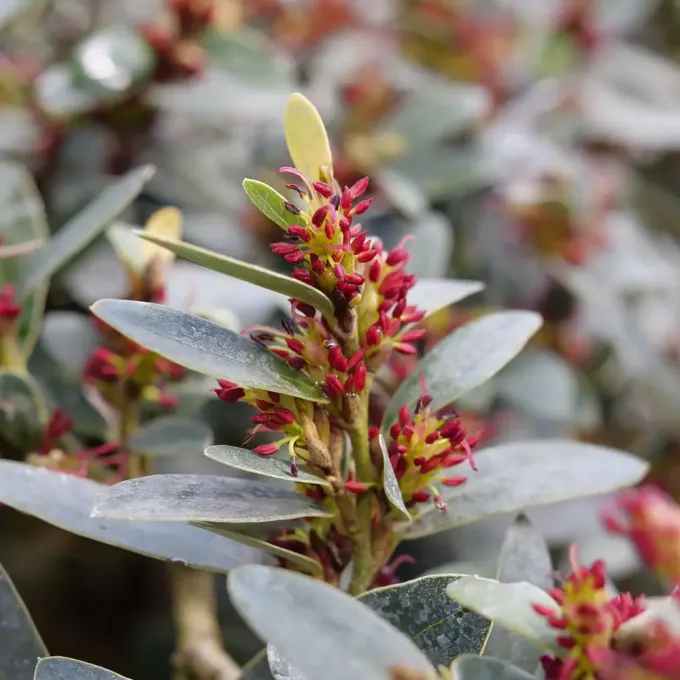
Botanically, it features small, leathery leaves that resemble those of the boxwood (Buxus), hence its specific epithet. Its growth pattern is dense, and it produces inconspicuous flowers that lack showy petals, focusing its energy primarily on vegetative development.
In landscaping, this plant is primarily utilized for its structural qualities. It is an excellent candidate for formal topiary, low hedges, or as a dense background plant in mixed borders, requiring minimal intervention once established in a suitable microclimate.
Main diseases and pests
The primary health risks for Distylium buxifolium involve fungal pathogens, particularly leaf spot diseases or root rot, which typically occur under conditions of poor soil drainage or high atmospheric humidity combined with stagnant airflow.
Pest pressure is generally manageable but may include common greenhouse and garden pests such as scale insects or spider mites. Maintaining plant vigor through proper fertilization and watering helps minimize the likelihood of severe infestations.