
Distylium racemosum
Distylium racemosum Siebold & Zucc.
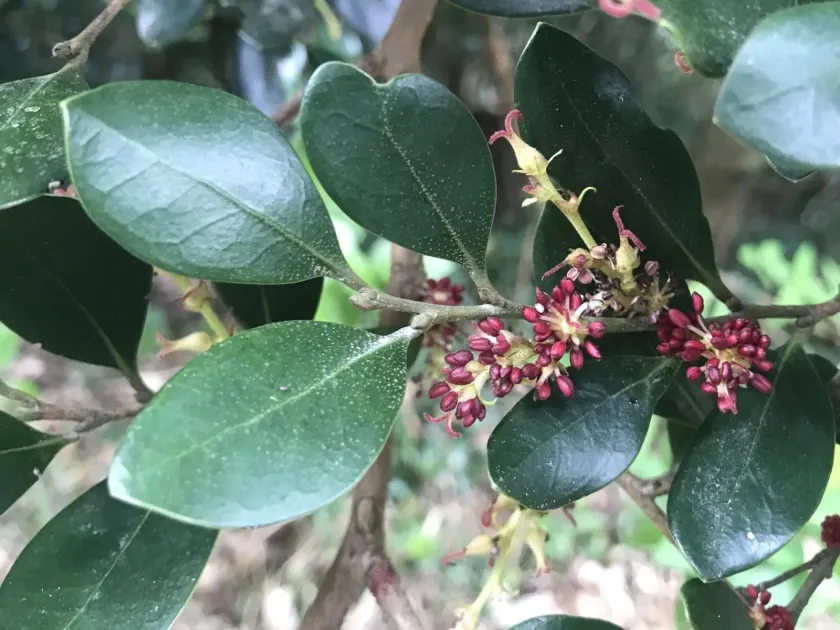
Description
Growing requirements
Distylium racemosum is an attractive evergreen shrub or small tree belonging to the Hamamelidaceae family. It is highly valued in horticulture for its dense, leathery, dark green foliage and its structural presence in both traditional and modern landscape designs.
Originating from Eastern Asia, particularly Japan and the Ryukyu Islands, this species is naturally found in temperate to subtropical forest ecosystems. It thrives in mild climates and has gained popularity worldwide as a reliable, low-maintenance alternative to boxwood or cherry laurel.
The plant requires well-drained, fertile soil with a slightly acidic to neutral pH. It is crucial to avoid waterlogged locations, as the root system of Distylium is susceptible to rot if excess moisture is not properly managed through adequate soil drainage or raised planting beds.
Climatic requirements involve protection from extreme frost. While mature plants are somewhat hardy, young specimens require mulch and protection from harsh winter winds to prevent foliage desiccation. It prefers partial shade to full sun, depending on the intensity of the summer heat in the specific growing region.
General maintenance is minimal once the plant is established. Annual pruning in early spring encourages denser branching and allows for the shaping of the plant into hedges or topiary figures. Fertilization with a balanced slow-release fertilizer at the start of the growing season is recommended for optimal growth.
Main diseases and pests
The plant is generally resistant to most pests and diseases. However, in poorly ventilated or excessively humid conditions, leaf spot fungi can occur. Ensuring good air circulation through proper spacing and pruning is the best preventive measure against these pathogens.
Pest issues are uncommon but may occasionally include scale insects or spider mites, which can be managed with horticultural oils or standard insecticidal soap applications if infestations are detected during routine monitoring of the foliage.