
Distylium myricoides
Distylium myricoides Hemsl.
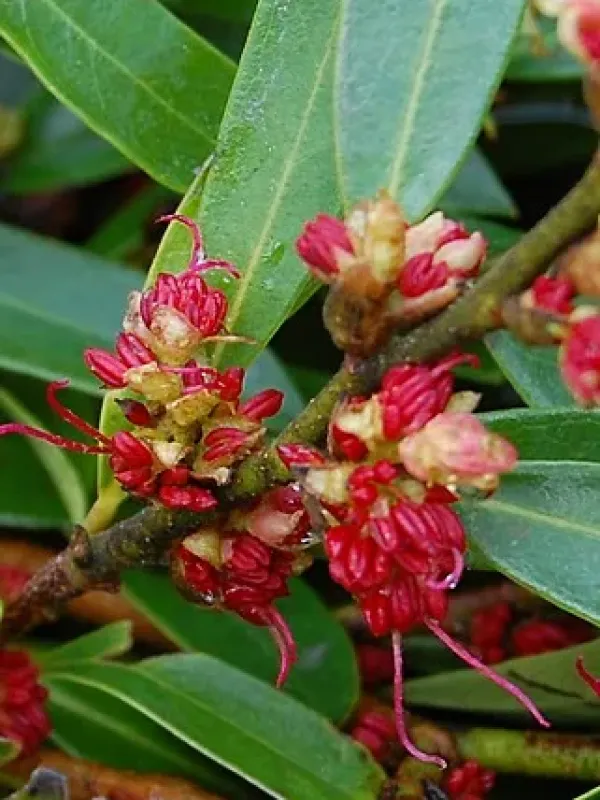
Description
Growing requirements
Distylium myricoides is an evergreen shrub belonging to the Hamamelidaceae family. It is prized in ornamental horticulture for its dense, glossy foliage and its ability to maintain a lush appearance throughout the year.
Originating from the mountainous regions of China, this species is naturally adapted to moist, cool environments. Its native habitat provides critical clues for successful cultivation in garden settings, specifically regarding moisture retention.
The plant thrives in well-drained, acidic to neutral soils rich in organic matter. Proper drainage is essential, as the roots are sensitive to waterlogging, which can lead to rapid deterioration of the plant health.
It prefers partial shade to filtered sunlight. While it can adapt to sunnier positions if the soil remains consistently moist, intense midday heat can scorch the leaves, so a protected location is always preferred.
Regular maintenance includes irrigation during dry spells and the application of a mulch layer around the base. This mulch helps keep the root system cool and suppresses weeds, reducing competition for nutrients.
Harvesting
The primary use of Distylium myricoides is in landscaping and garden design. Its evergreen nature and tolerance for pruning make it an excellent choice for screening, hedges, or as a feature plant in formal gardens.
Pruning should be performed in early spring to encourage dense growth and maintain the desired shape. The plant responds well to shearing, making it suitable for creating geometric topiaries or low, manageable boundaries.
Propagation is most effectively achieved through semi-hardwood cuttings taken during the growing season. Applying rooting hormones and maintaining high humidity levels significantly increases the chances of successful propagation.
The species is notable for its high resistance to common pests and diseases. It is generally considered a low-maintenance plant, requiring little intervention once it has become established in the landscape.
In addition to its aesthetic value, the plant contributes to the overall structural diversity of a garden. Its deep green foliage serves as a perfect backdrop for flowering perennials and adds texture to any outdoor composition.