
Ceylon ebony
Diospyros ebenum
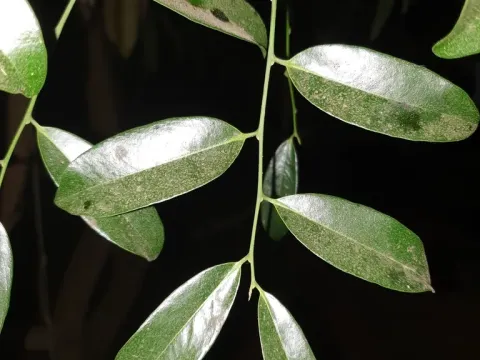
Ceylon ebony (Diospyros ebenum) belongs to the Ebenaceae family. This evergreen tree can reach a height of up to 25 meters in its natural habitat, characterized by a dense crown and thick, glossy foliage.
What the section contains
Ceylon ebony
The species is native to the tropical regions of South and Southeast Asia, including India, Sri Lanka, and Indonesia. This crop is strictly tropical and requires consistent warmth, as it cannot survive even light frosts, which limits its commercial cultivation.
For successful development, the tree requires deep, fertile, and well-drained soils. It thrives in environments with high atmospheric humidity and abundant annual rainfall, mimicking the conditions of its native tropical rainforests.
Agronomic management includes protecting young saplings from intense direct sunlight and controlling weed competition during the early establishment phase. The application of organic fertilizers is recommended to maintain the vigorous growth of the wood.
The primary economic value of Diospyros ebenum lies in its high-quality timber, known as black ebony. It is highly prized globally for its exceptional density, uniform black heartwood, and ability to be polished to a mirror-like finish.
Common threats to this crop include fungal root diseases, which typically occur in poorly drained, waterlogged soils. Maintaining proper drainage and monitoring soil moisture are critical to preventing root rot.
The tree is also susceptible to attacks by various leaf-eating insects and wood-boring beetles that target the stems. Regular phytosanitary inspections and integrated pest management are essential for maintaining healthy plantations.