
Bladder-nut
Diospyros whyteana
Description
Growing requirements
Diospyros whyteana, commonly referred to as the bladder-nut, is an evergreen tree or shrub belonging to the Ebenaceae family. It is highly valued in horticulture for its dense, glossy foliage and unique aesthetic appeal throughout the seasons.
Native to Southern Africa, this species thrives in a variety of environments, ranging from dense afromontane forests to rocky outcrops and coastal thickets. Its ability to grow in diverse conditions highlights its robustness as a landscape plant.
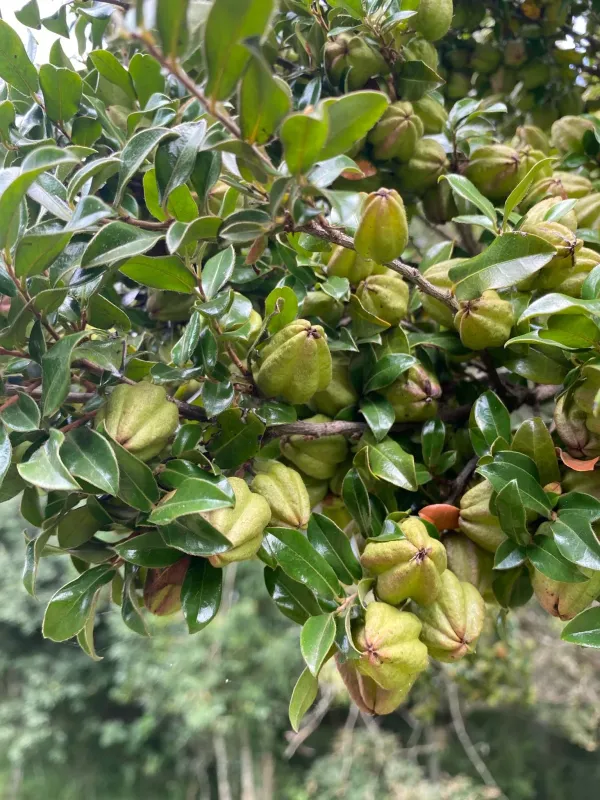
Botanically, the tree is distinguished by its small, fragrant, creamy-white flowers. After pollination, the female trees produce rounded fruits enclosed in papery, bladder-like calyces, which turn from green to reddish-brown, giving the plant its common name.
The plant prefers well-drained, fertile soil enriched with organic matter. While it is adaptable to partial shade, it performs best in sunny locations where it can develop a dense, compact crown structure suitable for ornamental purposes.
In practice, Diospyros whyteana is widely used for creating privacy screens, hedging, and as a specimen tree in gardens. It is appreciated by landscape architects for its slow growth rate and excellent response to pruning and shaping.
Main diseases and pests
While Diospyros whyteana is relatively pest-resistant, it can occasionally suffer from infestations if the environmental conditions are not optimal for the tree's health.
Scale insects and mealybugs are the most frequent pests, typically found on the undersides of leaves or along the stems. They extract plant sap and can lead to secondary fungal infections if not controlled early.
Root pathogens, such as Phytophthora, may affect the tree if the soil remains waterlogged for extended periods. Ensuring proper soil aeration and drainage is the most effective preventative measure against such issues.
Foliar spots caused by fungal pathogens can appear during periods of high humidity and poor air circulation. It is advisable to prune the inner branches to improve airflow and reduce the risk of moisture-related diseases.
Monitoring the plant for signs of stress, such as yellowing leaves or stunted growth, is crucial. Maintaining a balanced fertilization schedule and consistent watering practices will significantly reduce the tree's vulnerability to these threats.