
Black sapote
Diospyros nigra
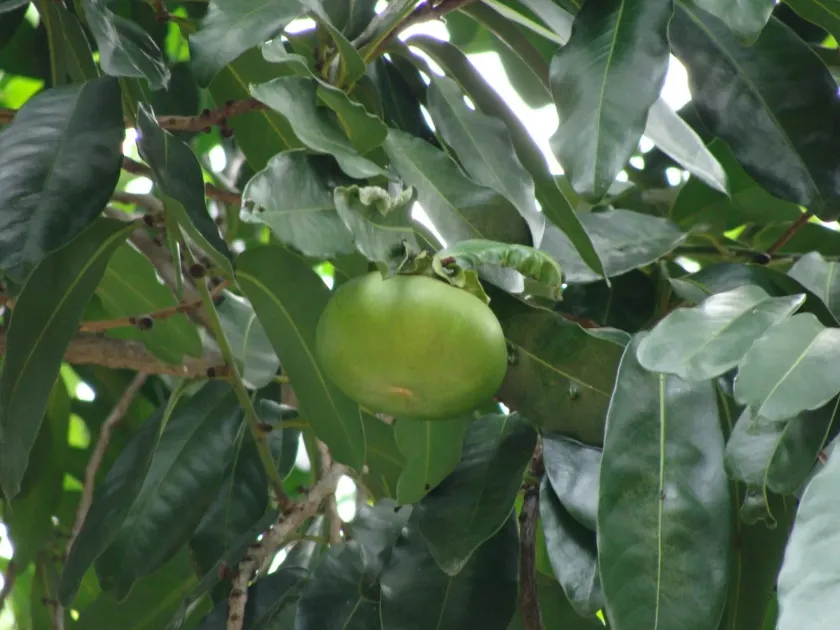
Description
Growing requirements
Black sapote (Diospyros nigra) is an evergreen fruit tree belonging to the Ebenaceae family. It is a slow-growing tree that can reach significant heights, characterized by its dense, glossy, dark green foliage.
Native to the lowlands of Mexico and Central America, this tree is closely related to the persimmon. It thrives in tropical and subtropical regions where it can receive ample warmth throughout the year.
The tree requires a frost-free environment to survive. It prefers full sun exposure but can tolerate light shade. Consistent warmth is essential for the healthy development of its wood and leaves.
Soil requirements include well-draining, nutrient-rich soil. While it is adaptable to various soil types, including sandy or clay-based soils, it performs best when the soil is deep and fertile.
Watering management is crucial; the tree enjoys regular moisture, but waterlogging must be avoided. During the establishment phase, young trees require frequent watering to develop a robust root system.
Yield
The black sapote fruit is famous for its dark, custard-like pulp when fully ripe, often compared to chocolate pudding. It is highly valued for its sweet, mild flavor and nutritional profile.
The fruit contains significant amounts of vitamins C and A, as well as minerals like calcium and phosphorus. It is widely used in smoothies, desserts, ice creams, and as a healthy baking ingredient.
Yields are typically high once the tree reaches maturity, which often takes several years after planting. Proper pruning is necessary to manage the canopy size and encourage fruit production.
Balanced fertilization throughout the growing season helps sustain high yields. Nutrient management should be tailored based on soil tests to ensure optimal growth and fruit quality.
Commercial plantations utilize specific cultivars selected for their size and fruit consistency. These trees are spaced according to local climate conditions to maximize exposure to sunlight and ventilation.
Main diseases and pests
Common pests include scale insects and mealybugs, which can cluster on leaves and stems. Regular monitoring and the application of horticultural oils can effectively manage these infestations.
Fungal diseases, such as leaf spot or anthracnose, can occur in areas with high humidity. Ensuring good air circulation within the canopy through proper pruning is the best preventive measure.
Root rot is a significant threat, especially in soils with poor drainage. It is critical to maintain proper soil moisture levels and avoid heavy mulching against the trunk, which can trap excess moisture.
Birds and rodents are often attracted to the ripening fruit. Using protective netting or harvest bags can prevent crop loss, especially as the fruits reach their soft, sweet stage.
Sanitation practices are essential for disease management. Removing and destroying infected twigs or fallen leaves prevents the buildup of pathogens in the orchard environment.
Harvesting
Harvesting black sapote requires precision, as ripe fruits become extremely delicate. They are hand-picked once they change color from bright green to an olive-brown shade and become soft to the touch.
Fruit maturity is subjective and depends on the specific cultivar. Harvesting too early results in a bitter, astringent fruit, while late harvesting leads to rapid spoilage due to the fruit's soft texture.
Post-harvest handling is critical. Fruits should be packed in ventilated containers with protective layers to avoid bruising, which quickly triggers oxidation and degradation of the pulp.
Once harvested, the fruit has a relatively short shelf life at room temperature. Cold storage can slightly extend the window of use, but rapid processing into pulp or puree is preferred for long-term storage.
The harvest season often spans several months because fruits on a single tree do not ripen uniformly. Regular inspections of the orchard ensure that fruits are picked at their peak ripeness.