
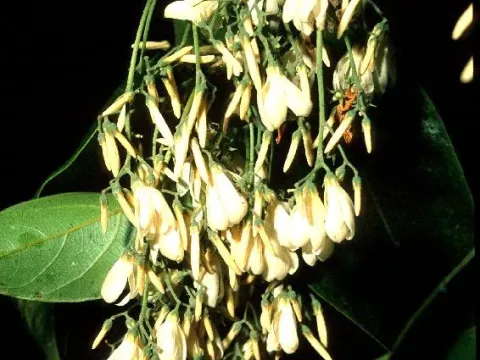
Vatica pauciflora
Vatica pauciflora
Vatica pauciflora is a tropical tree species that typically propagates through seeds, which are best sown immediately after collection due to their short lifespan.
What the section contains
Vatica pauciflora
For nursery cultivation, seeds should be placed in containers filled with well-drained, nutrient-rich potting media to ensure high germination rates.
Maintaining a constant temperature range between 25 and 30 degrees Celsius is essential for successful germination and early seedling development.
Young seedlings require consistent moisture and partial shade to protect them from excessive heat and direct sunlight in the initial stages of growth.
Once seedlings have developed robust root systems, they can be transplanted into larger nursery beds or final plots with careful soil preparation.
This species belongs to the Dipterocarpaceae family and thrives in humid tropical rainforest environments with consistent annual rainfall patterns.
The plant requires deep, fertile soils that are well-aerated and rich in organic matter to support its long-term growth and structural stability.
Excellent drainage is a critical requirement for this species, as the roots are sensitive to waterlogging, which can lead to fungal infections.
The tree prefers a sheltered position where it is protected from strong, drying winds that can cause physical damage to the leaves and delicate stems.
Proper spacing is necessary when planting in orchards or forestry plots to ensure each tree has enough light and root space to reach maturity.
The economic value of Vatica pauciflora is primarily derived from its high-quality timber, known for its density, strength, and overall durability.
Timber yield is achieved after a significant growth cycle, requiring long-term management strategies and patience from forestry operators.
Sustainable yield is optimized through controlled thinning and pruning practices, which improve the health and form of the remaining trees.
Proper maintenance of the plantation ensures a steady supply of high-grade wood suitable for furniture making and specialized construction projects.
Effective management also involves tracking tree growth rates to determine the best time for harvesting based on individual tree maturity.
Common threats to this species include various wood-boring insects and leaf-eating caterpillars that can significantly affect tree health.
Root rot and other fungal diseases are common risks in plantations where soil moisture is not managed properly or where air circulation is poor.
Climate change, manifesting as prolonged droughts or unpredictable weather patterns, poses a significant threat to the survival of these tropical trees.
Competition from aggressive weed species can suppress the growth of young trees, making regular weeding an essential part of plantation maintenance.
Early detection of pest outbreaks and disease symptoms through regular inspection is vital to prevent widespread damage across the planting area.
Harvesting timber requires identifying trees that have reached their full biological and commercial maturity based on trunk diameter and wood density.
Professional logging techniques are employed to fell trees in a way that minimizes impact on the environment and surrounding vegetation.
Initial processing of the logs, including stripping the bark and sorting, is usually performed on-site to improve logistical efficiency during transport.
Optimal harvesting is scheduled during the drier season to ensure better access to the site and prevent premature degradation of the harvested logs.
Sustainability protocols mandate that areas cleared during harvest are managed to facilitate natural regeneration or planned replanting of the species.