
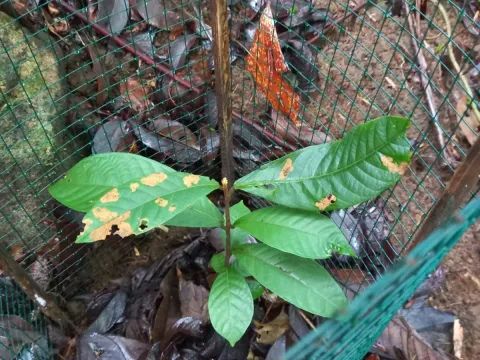
Vatica javanica
Vatica javanica
Vatica javanica is a prominent member of the Dipterocarpaceae family, native to the tropical forests of Southeast Asia. This evergreen tree is a significant botanical species known for its role in maintaining the structure of rainforest ecosystems.
What the section contains
Vatica javanica
The cultivation of this species requires a strictly tropical climate characterized by consistently high humidity and temperatures ranging from 22°C to 30°C. Avoiding thermal stress is essential for the healthy development of young saplings in nursery conditions.
Soil requirements for Vatica javanica include well-draining, nutrient-rich substrates with a slightly acidic to neutral pH level. Proper drainage is a critical factor, as stagnant water poses a severe threat to the root health of the tree.
Botanically, the tree exhibits a robust growth habit with dense, evergreen foliage. It is generally shade-tolerant during its early growth stages, which allows it to thrive in the protected environment of the understory before eventually reaching the canopy level.
Agronomic management involves maintaining natural litter layers to preserve soil moisture and nutrient cycling. Given its sensitivity to environmental changes, the tree benefits from sheltered locations that protect it from high-speed winds and abrupt microclimate shifts.
The primary economic application of Vatica javanica is in the forestry sector. Its timber is valued for its durability and moderate density, making it suitable for construction, flooring, and specialized cabinetry work in regions where it is harvested.
Forestry practices typically involve sustainable selective logging, which allows the ecosystem to regenerate naturally. Post-harvest processing requires controlled seasoning of the timber to ensure stability and prevent cracking, typical of tropical hardwoods.
Beyond timber production, the genus Vatica is investigated for its potential to produce natural resins. These substances have historical and contemporary applications in local medicine, adhesives, and varnish production, highlighting the multi-purpose utility of the tree.
Environmental conservation and reforestation efforts often include Vatica javanica due to its ecological contribution to forest canopy recovery. Its ability to provide habitat and stabilize soils makes it a preferred species for tropical restoration projects.
Seed harvesting is crucial for propagation, yet challenging due to the short shelf life of the seeds. Effective nursery management relies on immediate sowing protocols once seeds are collected, ensuring high germination rates for commercial or reforestation planting schemes.