
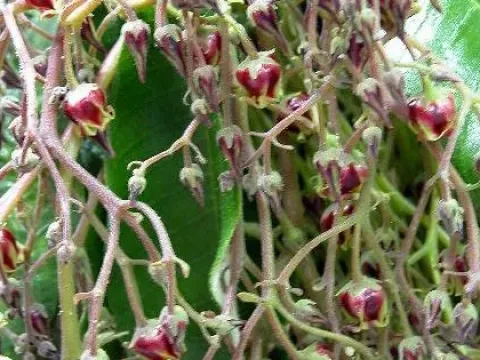
Upuna
Upuna
Upuna (Latin: Upuna borneensis) is a rare species belonging to the Dipterocarpaceae family. This large evergreen tree is endemic to the tropical rainforests of the island of Borneo.
What the section contains

Upuna
This species has extremely specific environmental requirements, favoring a humid equatorial climate with consistent rainfall throughout the year. The tree is highly sensitive to fluctuations in soil moisture levels.
The tree typically occupies areas with deep, well-drained soils, often found in lowland forests and on hillsides. Within its natural habitat, it forms part of the emergent layer of the forest canopy.
Biologically, Upuna is adapted to high levels of competition for sunlight. Under natural conditions, it exhibits slow growth rates, which presents significant challenges for artificial reforestation efforts.
Due to its restricted distribution and the impact of human activities, the species is included in international lists of threatened and endangered plants, necessitating strict conservation measures.
The primary threat to the survival of the Upuna species is large-scale deforestation, which leads to the severe fragmentation of its natural forest habitat.
In wild settings, the trees are susceptible to pathogenic fungi, common in waterlogged tropical soils, which can induce severe root rot and decay.
Young seedlings are frequently damaged by local insect populations and herbivorous mammals that feed on the soft bark and terminal buds of the saplings.
Altered microclimates, caused by logging in surrounding areas, lead to a drop in atmospheric humidity, which suppresses the physiological functions of the trees.
The lack of dedicated breeding and selection programs makes it difficult to manage endemic diseases, making protected reserves the only reliable strategy for species protection.