
Shorea xanthophylla
Shorea xanthophylla
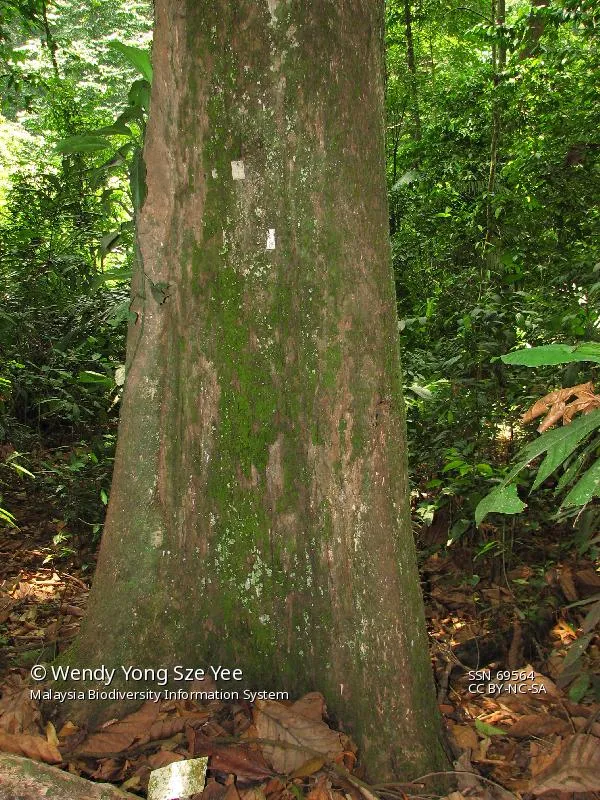
Description
Growing requirements
Shorea xanthophylla is a prominent member of the Dipterocarpaceae family, native to the tropical rainforests of Southeast Asia. This species is primarily found in the lowland forests of Borneo, where it thrives in humid, evergreen environments.
The culture requires a specific tropical climate characterized by consistently high temperatures and abundant rainfall throughout the year. It does not tolerate prolonged dry seasons, as its growth cycle depends on stable moisture availability for consistent nutrient uptake.
Soil requirements for this tree include deep, well-drained substrates. While it can adapt to various soil types, it performs best on clay-rich soils that offer both stability for the massive root system and effective drainage to prevent root rot.
Botanically, Shorea xanthophylla is a large canopy tree that contributes significantly to the structural complexity of the forest. Its growth pattern is relatively slow, which contributes to the formation of dense, heavy wood that is highly valued in industrial applications.
Economically, the species is harvested for its high-quality timber, often traded as part of the Meranti group of woods. The timber is prized for its durability, attractive grain, and suitability for high-end construction, furniture making, and heavy-duty woodworking.
Main diseases and pests
The primary threat to Shorea xanthophylla populations is the systematic loss of habitat due to deforestation and land-use conversion. The reduction of tropical forest cover limits the natural regeneration capacity of the species and isolates existing stands.
Pathogenic fungi are significant biological threats, particularly in degraded forest edges where microclimate stability is lost. These pathogens can cause root and stem rots that debilitate the trees and reduce their overall resistance to environmental stressors.
Pest infestations, especially by wood-boring insects, pose a continuous risk to the quality of the timber. Larvae boring into the wood create galleries that reduce the commercial value of the timber and introduce opportunistic microbes into the living tree.
Climate change, manifesting in unpredictable weather patterns and altered precipitation, places additional stress on this moisture-dependent species. Increased vulnerability to drought can cause physiological decline, making trees more susceptible to secondary pest attacks.
Conservation and sustainable management practices are essential to protect the remaining populations. Monitoring forest health through satellite imagery and ground surveys is critical to implementing timely interventions against large-scale outbreaks of pests and diseases.