
Parmentiera aculeata
Parmentiera aculeata
Description
Growing requirements
Parmentiera aculeata is an evergreen tropical tree belonging to the Bignoniaceae family. In its natural habitat, it can reach heights of up to 10 meters, featuring distinct spines on the trunk and branches, which gives the plant its scientific name.
This culture prefers the hot and humid climate of the tropics, requiring consistently high temperatures throughout the year. It is highly sensitive to frost and even short-term drops in temperature below +10°C.
Successful growth requires fertile, well-draining soil with a neutral or slightly acidic pH. It is essential to provide protection from strong winds, as the tree’s fragile branches are prone to breaking.
Agricultural management includes regular but moderate watering, avoiding waterlogging at the roots, which is fatal for this species. The plant thrives in sunny locations, though young trees benefit from light shading during the peak heat of the day.
Care also involves periodic sanitary pruning to shape the canopy and remove dead or damaged shoots, which promotes better airflow and reduces the risk of fungal diseases.
Yield
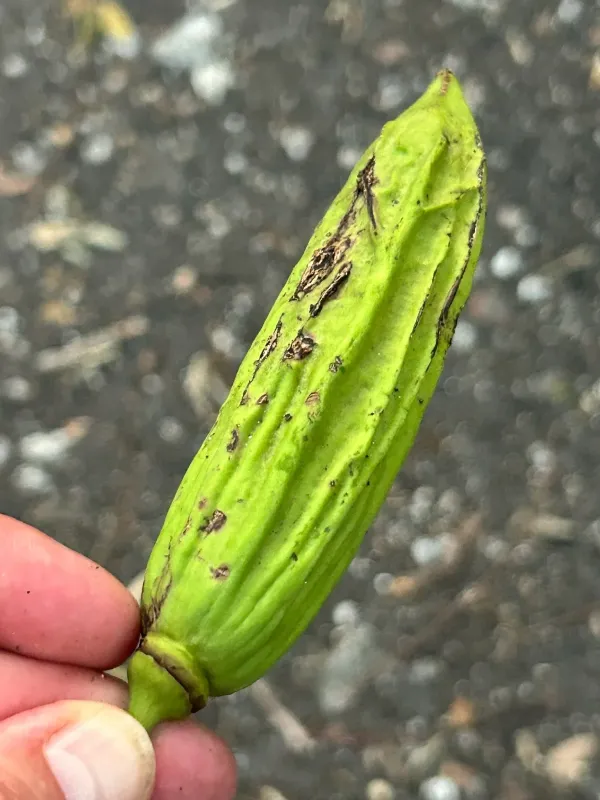
The economic value of Parmentiera aculeata lies in its unusual fruit, which is elongated and cucumber-like, leading to the common name "candle tree." The fruits are consumed raw, boiled, or fried.
The pulp of the fruit has a specific aroma and taste reminiscent of apples or squash. It is also used in regional folk medicine to prepare tinctures and remedies known for their diuretic effects.
Beyond the fruit, the wood is utilized on a small scale. While not a major commercial timber species, local populations use it to craft small household tools and decorative items.
Yield depends on the age of the tree and growing conditions. The plant is rarely grown on a commercial scale, appearing more commonly in agroforestry systems or private gardens throughout Latin America.
A key feature is the plant's ability to fruit year-round under stable conditions, making it a valuable source of sustenance for local communities in tropical regions.
Main diseases and pests
The primary threats to Parmentiera aculeata are root rots caused by over-irrigation. To prevent this, it is crucial to strictly control irrigation systems and use soil rich in organic matter.
The foliage can be affected by various leaf spot diseases caused by pathogenic fungi. Preventive treatments with bio-fungicides and maintaining sanitation in the root zone are highly recommended.
Among pests, insects that feed on leaves and young shoots, as well as aphids which can transmit viral diseases, are the most significant threats. Crown monitoring should be conducted weekly.
Nematodes are also a hidden threat capable of significantly slowing root system development. Crop rotation and the use of organic mulching materials are effective strategies for management.
Overall, the plant possesses a relatively strong immune system, and most issues can be mitigated by adhering to proper agronomic practices and selecting suitable planting sites based on regional climate specifics.