
Indian cork tree
Millingtonia hortensis
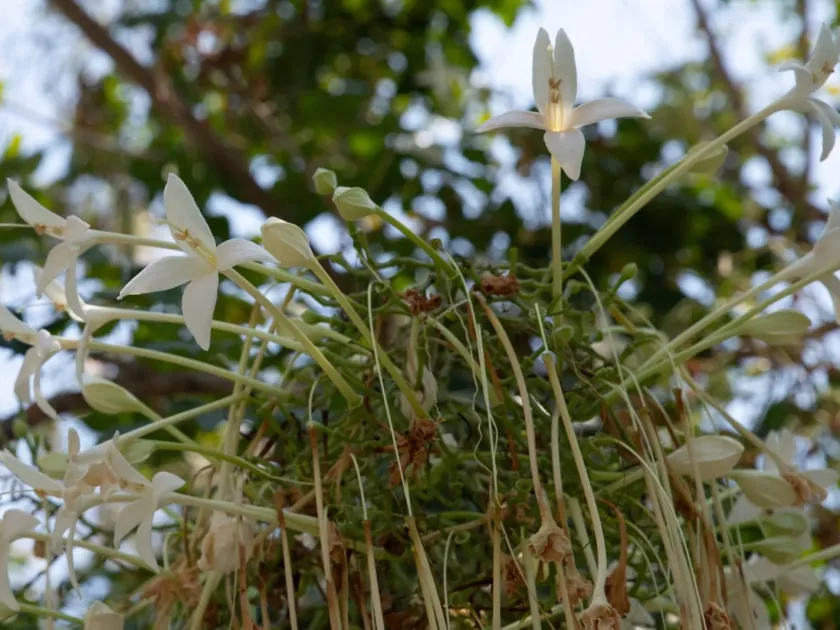
Description
Growing requirements
The Indian cork tree (Millingtonia hortensis) is an impressive botanical specimen belonging to the Bignoniaceae family. It is a fast-growing, evergreen tree that can reach heights of up to 25 meters, recognized by its delicate, bi-pinnate leaves.
Native to the humid tropical forests of Southeast Asia and India, this tree thrives in areas with distinct wet and dry seasons. It is essentially a tropical species that requires consistent warmth to maintain its lush foliage and reach its full potential.
The cultural requirements include a site with full sun exposure to stimulate flowering. While it is adaptable to various soil types, it performs best in deep, fertile, loamy soils that possess excellent drainage capacity to prevent root rot.
Climate suitability is paramount; the tree is not frost-hardy and requires protection from freezing temperatures. It is ideally suited for regions with temperatures consistently between 20°C and 35°C, ensuring a stable growth cycle throughout the year.
Proper agronomic management involves regular maintenance, including the removal of dead wood and the application of balanced fertilizers during the early spring growth flush to support the development of its fragrant floral displays.
Harvesting
The primary economic and aesthetic value of Millingtonia hortensis lies in its landscape utility. It is extensively planted along avenues and in large parks for its elegant, slender form and its spectacular, fragrant white flowers that bloom in clusters.
The timber of the Indian cork tree is highly valued for its moderate density and ease of processing. It is frequently utilized for cabinet making, decorative wood carving, and construction, thanks to its durability and natural resistance to common wood-boring insects.
Beyond wood production, the tree is a staple in indigenous medicine systems. The leaves are traditionally processed into tea or poultices to treat various respiratory conditions, including asthma and bronchitis, due to their potent anti-inflammatory agents.
The flowers possess an exquisite scent, often utilized in the perfume industry. Their essential oil composition is studied for its sedative and relaxing properties, making the flowers a popular resource for the aromatherapy and cosmetic industries.
- Collect flowers early in the morning for maximum essential oil yield.
- Ensure rapid post-harvest drying to retain the natural fragrance.
- Store in airtight containers to prevent loss of volatile aromatic compounds.
- Monitor for saplings that may emerge from wind-dispersed seeds.