
Markhamia stipulata
Markhamia stipulata
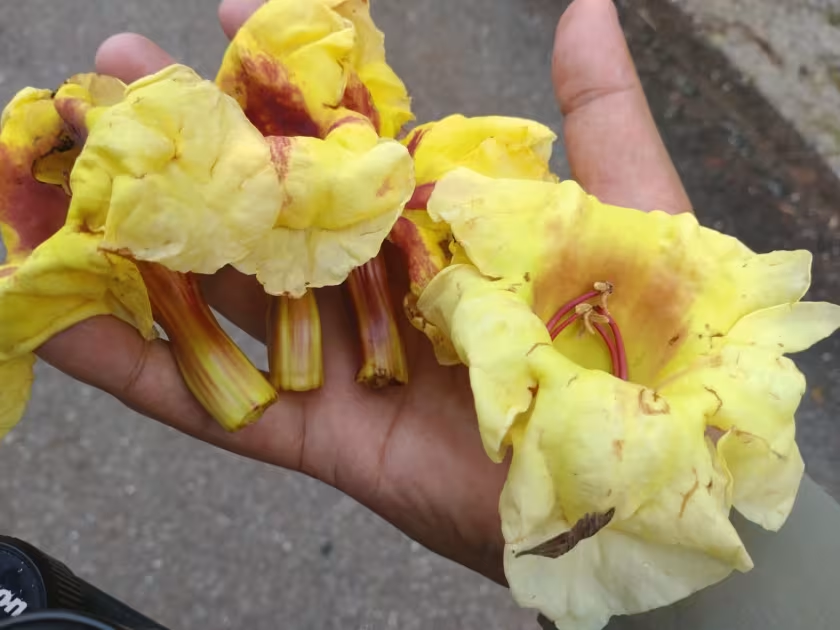
Description
Sowing dates
Sowing Markhamia stipulata seeds is best conducted during the onset of the rainy season, which provides the necessary humidity for successful germination.
The seeds should be sown in a rich, porous growing medium to a depth of approximately 1 to 2 centimeters to ensure protection and moisture retention.
Optimal germination occurs under warm, stable tropical temperatures, requiring consistent monitoring of the soil moisture levels in the nursery beds.
Young seedlings should be kept in partial shade until they establish a strong root system, after which they can be transitioned to more sunlight.
Transplanting to the field should occur once the seedlings reach a robust height, typically between 30 and 50 centimeters, ensuring minimal root disturbance.
Growing requirements
Markhamia stipulata is a member of the Bignoniaceae family, thriving best in tropical climates that offer high temperatures throughout the year.
The plant requires well-drained, fertile soil, as it is highly sensitive to waterlogging, which can easily lead to root rot and other physiological issues.
Full sun exposure is crucial for the tree to achieve its full growth potential and to produce a dense, high-quality timber structure as it matures.
Regular fertilization with organic matter is recommended to support rapid growth and to replenish nutrients depleted by the tree during its expansion phase.
Maintenance of moderate humidity in the surrounding environment is beneficial, making this species well-suited for cultivation in humid tropical regions.
Yield
The primary economic value of Markhamia stipulata lies in its durable timber, which is highly sought after for furniture making and heavy-duty construction.
In agroforestry systems, the tree serves as an excellent windbreak, helping to protect delicate crops from severe weather and soil degradation.
The flowers provide a significant nectar source, supporting local pollinator populations which are essential for the health of the entire agricultural ecosystem.
Various parts of the plant are utilized in traditional medicine, adding secondary value to the cultivation efforts of local farmers and foresters.
Beyond timber and medicine, the tree is often used for landscape restoration, assisting in the reforestation of degraded tropical landscapes.
Main diseases and pests
Fungal pathogens represent the most significant threat to this species, particularly when soil moisture levels are not properly managed in the field.
Insect pests, including aphids and larvae of various moth species, can cause severe defoliation if left unchecked during the early development stages.
Boring insects can infiltrate the trunk, potentially compromising the structural integrity of the timber and reducing the overall market value of the tree.
Weed competition in the early years of growth can significantly restrict nutrient access, making regular weeding an essential task for the farm manager.
Integrated pest management strategies are recommended to keep damage levels low while maintaining the ecological integrity of the planting site.
Harvesting
Harvesting timber requires precise timing, waiting for the tree to reach maturity to ensure the best grain density and mechanical strength for the wood.
Sustainable harvesting techniques, such as selective thinning, are preferred to ensure that the forest stand remains productive and continues to regenerate.
Primary processing of the timber, including debarking and initial cutting, is usually performed on-site to improve logistical efficiency and reduce handling.
Medicinal components such as leaves and flowers are harvested during peak blooming or vegetative cycles when active compounds are most concentrated.
Proper seasoning and drying of the wood are critical post-harvest steps to prevent warping and to ensure the longevity of the finished wood products.