
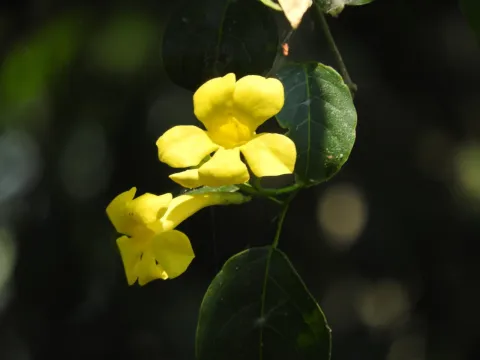
Anemopaegma
Anemopaegma
Anemopaegma is a genus of evergreen climbing plants belonging to the Bignoniaceae family. Native to tropical zones in Central and South America, these plants are known for their rapid growth and attractive floral displays.
What the section contains


Anemopaegma
For optimal development, the plants require bright, indirect sunlight. They thrive in rich, well-draining soil that is kept consistently moist but never waterlogged to prevent root complications.
As tropical plants, they demand warm temperatures and high humidity levels. They are not frost-tolerant and should be sheltered in greenhouses or indoor environments if temperatures drop below 15 degrees Celsius.
Agricultural management involves providing robust supports for the vines, as they utilize tendrils to climb. Regular pruning is necessary to maintain the desired shape and promote healthier foliage and flower production.
The primary use for Anemopaegma is ornamental, specifically for vertical landscaping, trellises, and garden arbors. Its hardiness and aesthetic appeal make it a popular choice for tropical and subtropical gardening.
Spider mites are a common pest, particularly in dry indoor conditions. They cause stippling on the leaves and can lead to significant foliage loss if not managed with regular moisture or miticides.
Mealybugs can infest the nodes and crevices of the plant. Manual removal or the application of horticultural oils is recommended to control these pests without damaging the tender leaves.
Fungal infections, such as root rot and leaf spot, are prevalent if drainage is poor or air circulation is insufficient. Improving the growing environment is the primary step in disease prevention.
Whiteflies may also affect the plant during warmer months, thriving on the underside of leaves. Integrated pest management using natural predators or soaps can effectively limit their populations.
To ensure a healthy crop, growers should perform frequent inspections of the foliage and stems. Maintaining a clean cultivation area helps minimize the survival and spread of common pathogens and insects.