
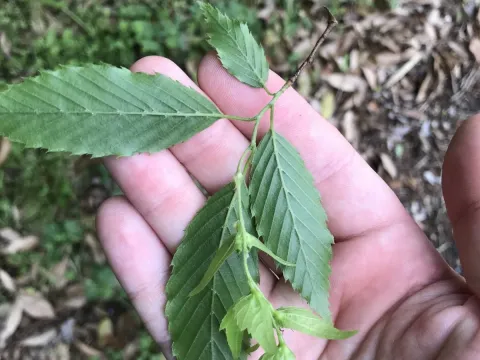
Chonosuki hornbeam
Carpinus tschonoskii
The Chonosuki hornbeam (Carpinus tschonoskii) belongs to the Betulaceae family. It is a deciduous tree native to East Asia, specifically regions within Japan, Korea, and China, where it thrives in temperate forest environments.
What the section contains
Chonosuki hornbeam
The species prefers deep, nutrient-rich, and well-drained soils. While it can tolerate partial shade, it grows most vigorously in sites that receive consistent exposure to light, which supports the development of its dense foliage.
Water requirements are moderate, but the tree is sensitive to prolonged drought. During the establishment phase, supplemental irrigation is essential to ensure that the root system develops deeply and provides stability for the growing plant.
Regarding climate, this hornbeam is well-adapted to regions with distinct seasonal shifts. It requires a proper winter dormancy period to sustain its long-term health and growth vigor in the subsequent spring season.
In terms of practical utility, the wood of the Chonosuki hornbeam is highly valued for its hardness, density, and durability. It is frequently utilized in the manufacturing of high-quality tool handles, furniture, and various precision wood products.
The species generally maintains good resistance to most common diseases, but it may occasionally fall victim to fungal infections such as powdery mildew, especially if planted in areas with poor airflow and excessive humidity.
Insects like aphids and various leaf-eating caterpillars are the most typical pests. These usually cause damage to tender new leaves and shoots during the rapid growth phase of the early spring season.
Environmental stress caused by poor soil drainage can lead to root rot, which significantly weakens the tree's resistance to further pest attacks or secondary infections, leading to a decline in growth.
Sanitation practices, including the removal of dead or broken branches, are crucial for maintaining the health of the tree. This helps eliminate potential harborages for insects and fungal spores.
Integrated pest management, including regular monitoring and the use of targeted treatments, is recommended to ensure the long-term survival and structural integrity of the hornbeam specimens.