
Dwarf birch
Betula minor
Description
Growing requirements
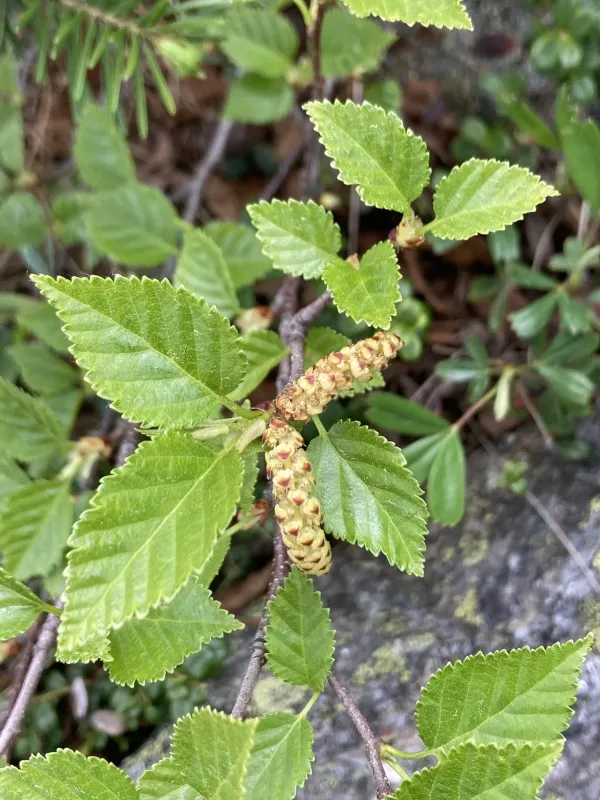
Betula minor, commonly known as the dwarf birch, is a woody perennial species within the Betulaceae family. This specific birch is native to the eastern parts of North America, particularly flourishing in the harsh, rugged environments of Newfoundland and surrounding maritime regions.
The plant exhibits remarkable adaptation to acidic, stony soils and thrives in locations where competition for light and nutrients is moderate. It is structurally distinguished from other birch species by its smaller foliage, shrub-like growth habit, and exceptional resistance to extreme sub-arctic weather conditions.
Regarding climatic needs, Betula minor requires a temperate to cool environment with well-defined seasons. It performs best in sites with high atmospheric moisture and cool temperatures, avoiding direct, intense heat which can stress the root system and inhibit canopy development.
Agrotechnical management for this species focuses primarily on site selection and soil structure. Since the species naturally grows on rocky substrates, growers should prioritize well-draining soils and avoid organic-rich waterlogged beds that could lead to root rot. Minimal fertilization is required due to the plant's efficiency in nutrient-poor environments.
Economic and utility applications are mostly concentrated in specialized landscaping, reforestation of northern degraded areas, and soil stabilization projects. Its small stature makes it an ideal candidate for creating natural windbreaks in exposed areas without overshadowing agricultural crops or smaller garden beds.
Main diseases and pests
Typical plant health issues involve fungal pathogens like powdery mildew and leaf spot diseases, especially in areas with stagnant air circulation. Proactive management involves thinning branches to ensure maximum airflow throughout the crown during the humid months of the growing season.
Insects such as leaf miners and various defoliating beetles are the most frequent pests. Implementing early detection protocols and utilizing biological controls, such as beneficial parasitic wasps, helps maintain the health of the specimens without relying on synthetic chemical pesticides.