
Birch hybrids
Betula hybrids
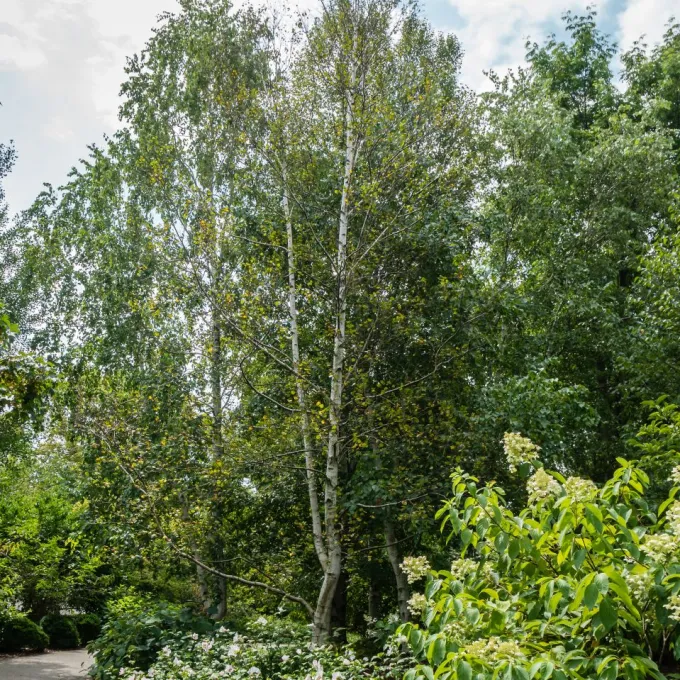
Description
Sowing dates
Seed propagation of birch hybrids requires specific environmental conditions, as seeds often exhibit low germination rates or genetic segregation. Sowing is typically performed in autumn or spring following a stratification period of 1–2 months.
Sowing depth should be minimal, as the seeds are very fine and require surface placement. Nursery beds are often mulched with peat or sand to ensure uniform moisture and stable germination.
Vegetative propagation, including grafting and clonal methods, is usually conducted in early spring before active sap flow, which improves the success rate of young transplants.
The use of container-grown seedlings allows for flexibility in planting schedules, enabling foresters to plant during the entire active growing season under favorable conditions.
Success depends on maintaining correct planting density, which is determined by the intended end-use of the trees, whether for high-quality timber or landscape enhancement.
Growing requirements
Birch hybrids, belonging to the Betulaceae family, are the result of deliberate breeding or natural cross-pollination. They frequently exhibit heterosis, demonstrating faster growth rates than their parent species.
These trees thrive in areas with abundant sunlight, as most Betula species are light-demanding. In shaded environments, crown development slows, negatively impacting timber quality.
Soil requirements vary by hybrid line, but generally, these trees prefer well-drained loamy or sandy soils with moderate moisture levels throughout the growing season.
Hybrids show high adaptation to climatic stresses, including extreme cold, making them excellent candidates for reforestation projects in northern latitudes and high-altitude areas.
Regular soil moisture monitoring is essential during the initial years of development, as the shallow root system of young birch hybrids is susceptible to severe drought stress.
Yield
The primary use of birch hybrids is the production of high-quality timber, highly valued in the furniture, plywood, and veneer industries for its consistency and appearance.
Due to significantly higher biomass increment rates, these hybrids can reach technical maturity 10–15 years earlier than conventional wild birch, increasing operational efficiency.
Some hybrid lines possess aesthetic value, characterized by unique bark textures or crown shapes, making them desirable for large-scale landscaping and urban greening projects.
Growth intensity is directly linked to soil fertility; thus, supplemental fertilization in the early stages of plantation development can lead to substantial increases in timber yield.
In breeding programs, hybrids are instrumental in developing forest plantations with standardized wood fiber properties, which are critical for specialized woodworking processes.
Main diseases and pests
Fungal infections, such as heart rot and leaf rust, represent the greatest threat to birch hybrids and are often encouraged by poor forest management and lack of airflow.
Insect pests, including birch sawflies and various leaf beetles, can cause significant damage to the foliage, which reduces the tree's ability to photosynthesize and stunts growth.
Winter bark damage caused by small rodents is a serious issue that requires protective barriers or repellent application to prevent girdling of young, susceptible saplings.
Poor drainage in the root zone can trigger root rot development, making proper site preparation and soil drainage essential for plantation longevity.
- Sanitary pruning of infected branches
- Regular pest and disease monitoring
- Application of fungicides in high-risk areas
- Rodent control measures during winter
Harvesting
Harvesting of birch hybrids takes place once the trees reach target technical parameters, specifically trunk diameter at breast height and overall tree height.
In commercial forestry, clear-cutting or group-selection harvesting is employed to ensure site regeneration and efficient log extraction during the dormant season.
Operations are typically scheduled during the autumn and winter months, which maximizes wood quality and facilitates transport across forest sites under frozen conditions.
Modern mechanized harvesters are preferred to minimize soil compaction and damage to the roots of remaining trees in selection harvesting scenarios.
Post-harvest site management, including the removal of logging residues, is critical for fire prevention and maintaining the overall sanitary health of the forest plot.