
Bog birch
Betula humilis
Description
Growing requirements
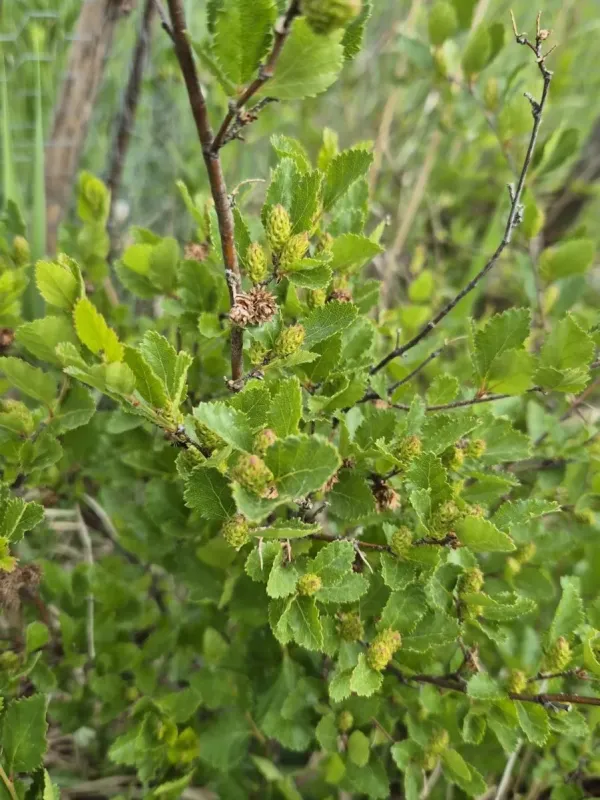
Bog birch, known botanically as Betula humilis, belongs to the Betulaceae family and is recognized as a distinctive deciduous shrub. It typically reaches a height of 1 to 2 meters, developing a dense structure that makes it an excellent choice for naturalistic planting schemes.
This species is native to wetlands, fens, and swampy areas throughout Northern Eurasia. To succeed in cultivation, it requires specific soil conditions, specifically acidic, organic-rich, and consistently moist substrates that mimic its natural bog habitat.
In terms of climate, Bog birch is exceptionally hardy and capable of surviving extreme cold, making it suitable for arctic and temperate climates. It thrives in open, sunny locations but requires protection from excessive heat and prolonged soil dehydration, which can be detrimental to its health.
Agrotechnical maintenance primarily involves irrigation management to ensure the root zone remains damp. While the plant is robust, mulching with pine needles or bark helps maintain the necessary soil acidity and moisture levels throughout the growing season.
The primary horticultural application of Betula humilis is in landscaping, particularly for ecological restoration projects and the beautification of pond margins. Its ability to tolerate wet feet makes it a valuable asset for designers looking to integrate native flora into challenging waterlogged sites.
Main diseases and pests
The most common disease threats include various types of fungal rust and leaf spot pathogens, which typically proliferate in stagnant air conditions. Ensuring proper spacing between plants helps maintain airflow and reduces the risk of these common fungal infections.
Insect pests such as leaf miners, sawflies, and aphids can occasionally infest the foliage, leading to premature leaf drop or reduced vigor. Integrated pest management strategies, such as monitoring for early signs of damage and applying targeted treatments, are essential for long-term health.