
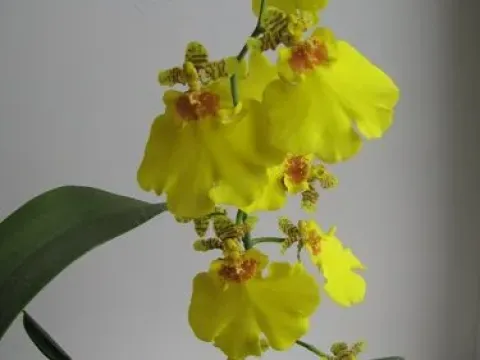
Oncidium
Oncidium
Oncidium is a diverse genus of epiphytic and lithophytic plants within the Orchidaceae family. Naturally distributed throughout tropical and subtropical America, these orchids thrive in various habitats ranging from dense humid forests to high-altitude mountain regions, where they anchor themselves to trees or rocks.
What the section contains
 Oncidium
 hybrids
Oncidium
Oncidium hybrids
 Oncidium abortivum
Oncidium abortivum
Oncidium abortivum
 Oncidium alberti
Oncidium alberti
Oncidium alberti
 Oncidium ampliatum
Oncidium ampliatum
Oncidium ampliatum
 Oncidium ariasii
Oncidium ariasii
Oncidium ariasii
 Oncidium baueri
Oncidium baueri
Oncidium baueri
 Oncidium cheirophorum
Oncidium cheirophorum
Oncidium cheirophorum
 Oncidium ensatum
Oncidium ensatum
Oncidium ensatum
 Oncidium gardneri
Oncidium gardneri
Oncidium gardneri
 Oncidium geertianum
Oncidium geertianum
Oncidium geertianum
 Oncidium gramineum
Oncidium gramineum
Oncidium gramineum
 Oncidium incurvum
Oncidium incurvum
Oncidium incurvum
 Oncidium lanceanum
Oncidium lanceanum
Oncidium lanceanum
 Oncidium luridum
Oncidium luridum
Oncidium luridum
 Oncidium luteopurpureum
Oncidium luteopurpureum
Oncidium luteopurpureum
 Oncidium naevium
Oncidium naevium
Oncidium naevium
 Oncidium reflexum
Oncidium reflexum
Oncidium reflexum
 Oncidium sceptrum
Oncidium sceptrum
Oncidium sceptrum
 Oncidium spectatissimum
Oncidium spectatissimum
Oncidium spectatissimum
 Oncidium uniflorum
Oncidium uniflorum
Oncidium uniflorum
 Oncidium warscewiczii
Oncidium warscewiczii
Oncidium warscewiczii
 Tiger Oncidium
Oncidium tigrinum
Tiger Oncidium
Oncidium tigrinum
 Variegated Oncidium
Oncidium variegatum
Variegated Oncidium
Oncidium variegatum
Oncidium
The culture is defined by its sympodial growth habit, characterized by the development of pseudobulbs that store water and nutrients. This biological adaptation allows the plant to survive fluctuating moisture levels. Leaves are diverse, ranging from broad and thin to succulent and cylindrical, reflecting their native microclimates.
Successful production requires precise temperature control. Most species need a distinct diurnal temperature range, with cooler nights compared to warmer days, to trigger the blooming process. This temperature variation is essential for the physiological transition from vegetative growth to flowering.
The growing medium must provide excellent drainage and aeration for the sensitive root system. A coarse substrate, typically consisting of conifer bark, charcoal, and perlite, is used to prevent root suffocation, which is a common failure point in inexperienced cultivation attempts.
Light intensity is the primary driver of Oncidium health. These orchids require bright but diffused light to sustain high photosynthetic rates. If light levels are too low, the plant will fail to produce new pseudobulbs; if light is too intense, the leaf tissue will suffer from dehydration and chlorosis.
Scale insects are a primary threat, attaching themselves to the pseudobulbs and leaves to feed on plant sap. Their presence often leads to stunted growth and the spread of sooty mold, necessitating rigorous integrated pest management and the use of systemic insecticides.
Spider mites represent a major challenge in greenhouse environments with low humidity. These pests feed on the undersides of leaves, causing significant physiological stress and aesthetic damage. Regular misting and the application of acaricides are standard protocols for effective control.
Root rot, driven by pathogens such as Pythium or Phytophthora, is highly prevalent in poorly ventilated settings where the substrate stays wet for too long. Maintaining good airflow around the pot and avoiding water stagnation is vital for long-term survival of the crop.
Mealybugs are frequently found in the tight crevices between leaves and pseudobulbs. Their cottony appearance makes them easy to spot, but their ability to hide makes them difficult to eradicate without a systematic approach involving both physical removal and chemical treatment.
Bacterial soft rot is a fast-spreading disease that can destroy an entire collection. It is usually triggered by high moisture trapped in the crown of the plant. Immediate excision of infected tissues using sterilized cutting tools and the application of fungicides are mandatory to contain the spread.